Control Is Everything. Until It Comes to Your Forklift Fleet
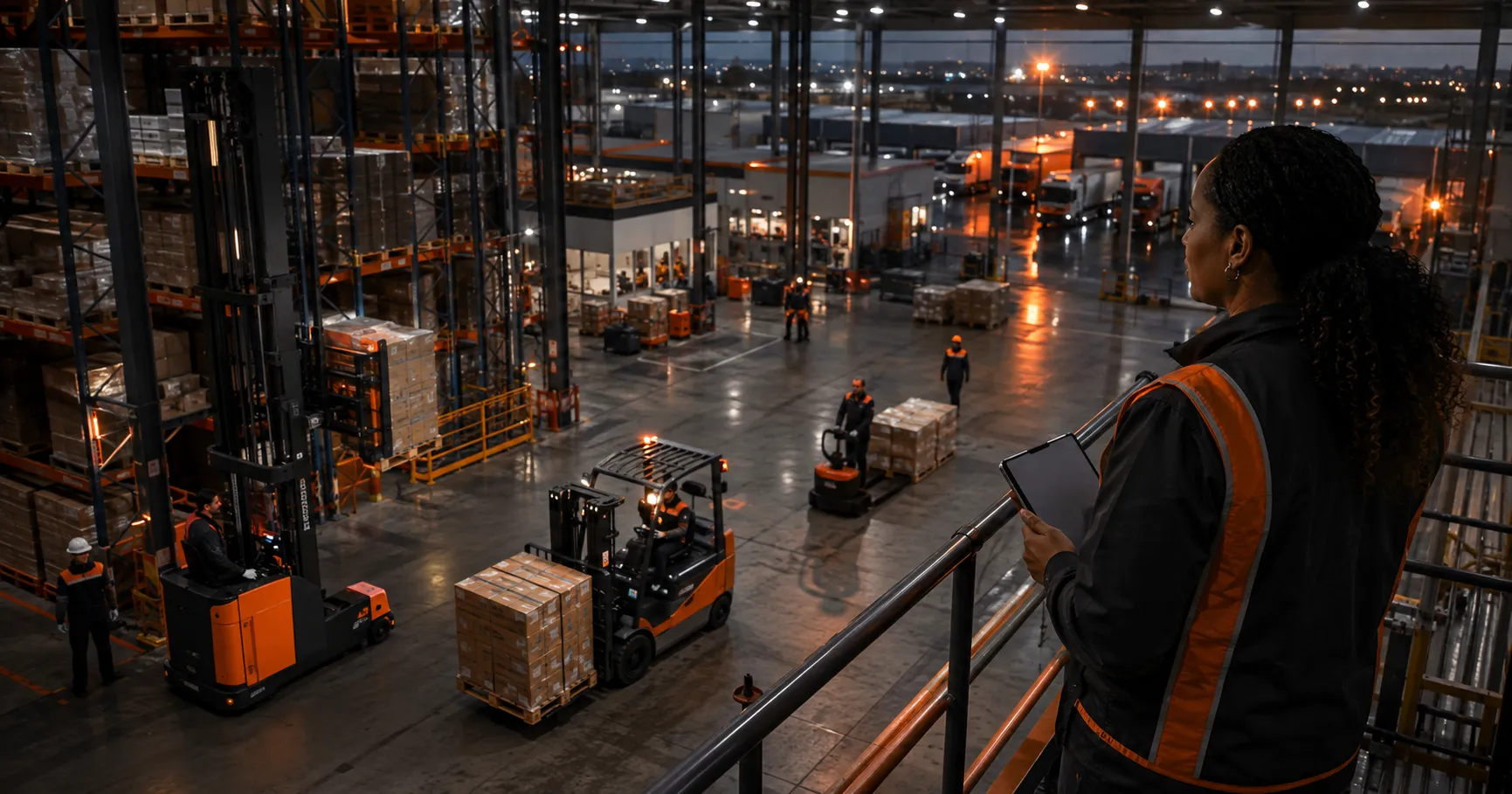
In logistics, control is the foundation of operational success. Every movement is planned, measured and optimised—from inventory management and transport scheduling to labour allocation, throughput and delivery windows. Yet there is one critical operational area that many organisations still don’t truly control: their forklift fleet. This is where one of the industry’s biggest operational blind spots exists.
Every logistics operation depends on forklifts. Without them, pallets don’t move, trucks don’t load, picking slows, and dispatch comes to a standstill. Forklifts are not simply support equipment—they are production assets that directly influence productivity, customer service and profitability. Despite this, many fleets are still managed reactively, overseen by multiple suppliers, tracked through spreadsheets and measured inconsistently. The result is a critical operational asset without centralised oversight.
Why Traditional Fleet Management Falls Short
For decades, logistics companies have relied on a combination of service providers, rental partners, internal spreadsheets and site-level management to oversee their forklift fleets. Each plays an important role. However, none provide complete operational visibility. Traditional approaches rarely offer independent oversight, consistent reporting across multiple sites or meaningful performance accountability. Each location often develops its own processes, suppliers report in different formats and operational issues are addressed in isolation. Without a single, consolidated view of fleet performance, there is no true operational control.
The Real Risk Isn’t Breakdown—It’s Blindness
Most organisations believe their greatest fleet risk is equipment failure. It isn’t. The greatest risk is not knowing how frequently assets fail, how long they remain unavailable and what those failures are actually costing the business. Logistics teams are exceptionally good at adapting. Machines are shared between departments, work is reprioritised, overtime is authorised and manual processes fill the gaps. Operations continue.
But beneath the surface, efficiency declines, labour costs increase, customer pressure grows and productivity quietly erodes. Because these losses are rarely measured in a centralised way, they often remain invisible.
What We See Inside Real Logistics Operations
When FMC begins working with logistics businesses, we rarely discover completely broken operations. Instead, we find capable operations carrying hidden inefficiencies. Forklifts are being serviced, but maintenance isn’t being optimised. Breakdowns are resolved, but trends aren’t analysed. Technicians remain busy, but performance isn’t objectively measured. Operational costs are recorded, but few organisations fully understand what is driving them. Everything is happening. Very little is connected.
FMC Introduces What the Industry Has Been Missing
FMC provides something the logistics industry has traditionally lacked: independent, centralised fleet control. Not from the perspective of a supplier. Not from the perspective of a maintenance contractor. From the perspective of operational management and business performance.
One Source of Truth Across the Entire Fleet
Rather than relying on emails, spreadsheets and multiple supplier portals, FMC consolidates all fleet information into a single platform. This includes fleet data, service history, downtime records, compliance documentation and cost visibility across every site, supplier and asset. For the first time, management gains a complete, accurate and reliable picture of fleet performance.
Turning Uptime Into a Measurable KPI
Many businesses believe their fleet uptime is acceptable because operations continue. FMC replaces assumptions with measurable data. Management can immediately see where uptime is being lost, which assets experience recurring failures, how long service events take and how downtime affects operations. Once uptime becomes measurable, it becomes manageable.
From Reactive Maintenance to Performance Management
FMC doesn’t replace service providers. It changes how they are managed. By introducing SLA monitoring, response-time tracking, repair-duration reporting and supplier benchmarking, maintenance shifts from an activity-focused function to a performance-driven one. Service quality is no longer based on perception—it is measured objectively.
Creating Technician Accountability
Busy technicians do not automatically translate into efficient operations. FMC provides visibility into technician allocation, time spent on-site, repeat failures, rework trends and overtime patterns. This allows organisations to identify improvement opportunities, improve accountability and continuously optimise technician performance without relying on assumptions.
Strengthening Compliance Across Every Site
Compliance is fundamental to any logistics operation. However, many organisations still depend on manual reminders, site-level administration and supplier updates to manage inspections and legal requirements. FMC centralises load testing, scheduled servicing, inspections and compliance records into one platform. This ensures critical dates are not missed, audits become significantly easier and operational risk is reduced.
The Power of Multi-Site Visibility
For organisations operating multiple warehouses or distribution centres, the value of FMC increases exponentially. Instead of reviewing isolated reports from individual sites, head office gains standardised reporting, consistent performance measurement and meaningful cross-site comparisons. Leadership moves beyond simply receiving information. They begin actively managing operational performance across the entire business.
Why FMC Is Becoming Essential
The logistics industry is evolving rapidly. Customer expectations continue to rise. Margins continue to tighten. Operations are becoming increasingly data-driven, while every minute of downtime carries greater financial impact. In this environment, hidden inefficiencies matter. Unmeasured downtime matters. Limited visibility matters. FMC is more than a fleet management platform. It is an operational control layer that enables businesses to make informed decisions based on accurate, independent information. Without that visibility, organisations remain reactive, operate with unnecessary risk and leave significant efficiency gains unrealised.
The Future of Fleet Management
Logistics companies do not have a forklift problem. They have a visibility problem. Once visibility is established, uptime improves, operating costs reduce, supplier performance becomes measurable and management decisions become increasingly strategic.
The conversation is no longer: “Do we need better forklifts?” The real question has become: “Do we truly have control over the forklifts we already own?” As logistics continues to evolve, organisations that gain control over their forklift operations will gain control over something far more valuable—the performance of their entire supply chain.