A loan unit issued during a repair can quietly become a permanent fixture on site. How to keep every courtesy truck tied to its job, its location and a clear return point.
A reach truck goes into the workshop on a Tuesday with a mast fault. By the afternoon the service provider has dropped off a loan unit so the night shift can keep picking, and everyone is relieved. The driver signs a slip on the dock. The slip goes into a cab pocket.
Five weeks later the repaired truck has been back on site for a month. The loan unit is still there too, parked beside the charging bay and quietly doing the work of a machine that was retired in September. The service provider’s workshop has been looking for it for a fortnight, because another customer needs it. On site, nobody is quite sure whose it is.
Nobody stole anything. Everybody simply assumed somebody else was keeping track.
A loan unit is a promise without much paperwork
Loan units, courtesy trucks and stand-in machines exist for a good reason. When a customer’s forklift is off for repair, a temporary replacement keeps the operation moving while the workshop does its job. It is one of the more practical things a service provider can offer.
The trouble is the way loans are usually arranged. A phone call, a quick check of what is standing in the yard and a delivery the same day. It is fast, which is the point. It is also the moment when the record is most likely to be skipped, because the urgency belongs to the breakdown, not to the stand-in.
Forklift loan unit tracking starts by treating the courtesy truck as what it is: a working asset on someone else’s site, for a reason and for a period.
See how FMC keeps every asset, job and record connected.
Book a demoWhere courtesy trucks go missing
Loan units rarely disappear in one dramatic moment. They drift.
The first drift is the undocumented issue. The unit leaves the yard on the strength of a conversation, so there is no record of which machine went, to which site or for which job. Weeks later, the only evidence is a delivery slip somebody may have kept.
The second is the quiet move. The customer has three sites, and the loan unit is borrowed from the first site by the second, because it was free and they were busy. The service provider still thinks it is at the original address.
The third is the forgotten return. The repaired truck goes back into service, the job card is closed and the loan simply carries on, because nothing in the process says it should end. A temporary arrangement becomes a permanent one by default.
Tie the loan to the job that caused it
Every loan unit is issued because of something: a breakdown, a repair waiting on parts or a machine away for a major service. That job is the natural anchor for the loan.
When the loan is recorded against the job, two useful things happen. Anyone looking at the repair can see that a stand-in is on site, and anyone looking at the stand-in can see why it is there. When the job closes, the open loan becomes an obvious question rather than a surprise five weeks later.
It also helps to agree an expected return point at the start. That might be a date, or it might be the day the repaired truck is back in service. Either is better than “we’ll sort it out later”, which is how most long-term loans begin.
A loan unit still needs its own history
It is easy to think of a courtesy truck as a temporary detail. It is still a forklift, working shifts and carrying loads, and it needs the same care as any other machine.
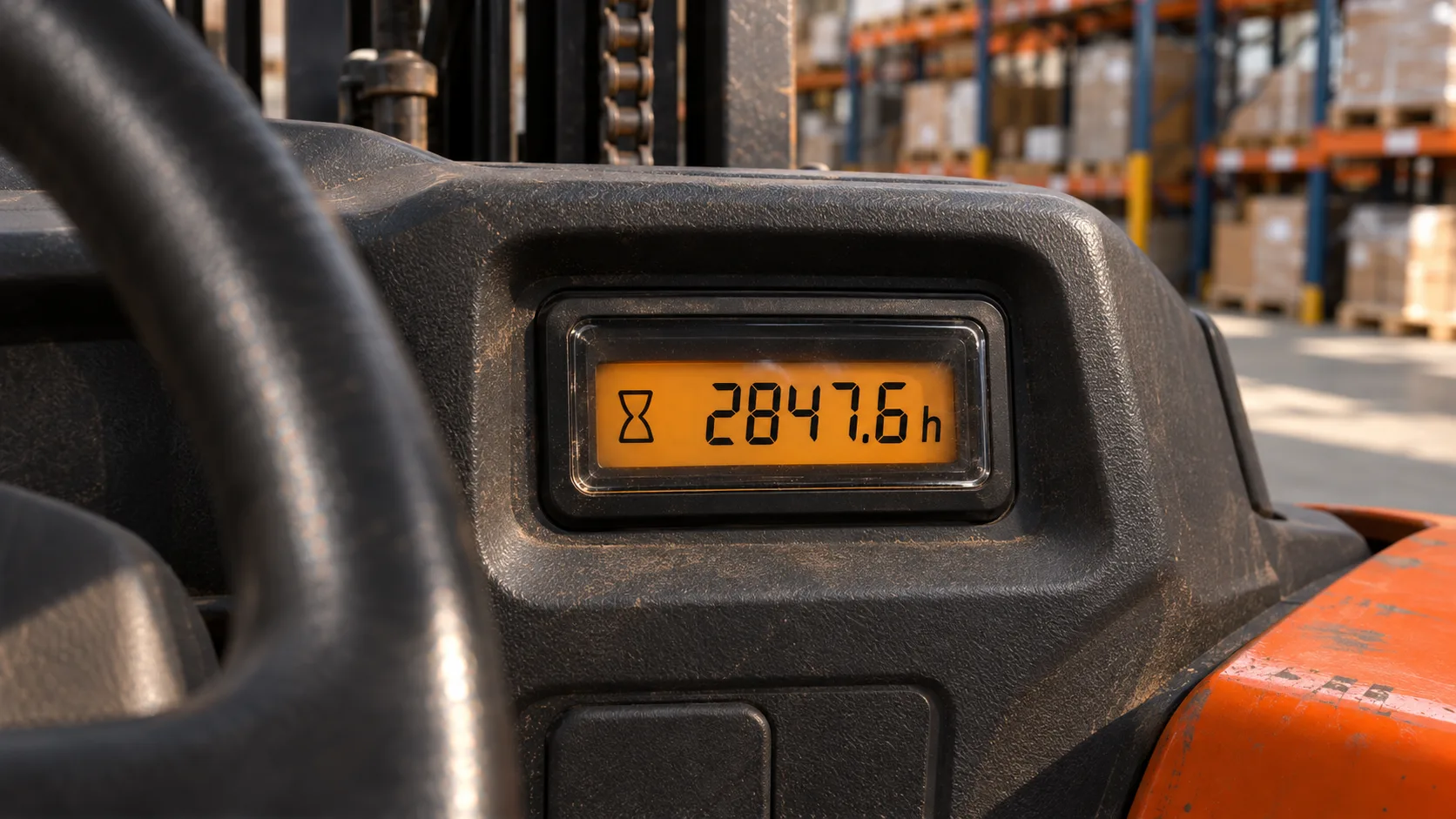
Inspections still fall due while it is out. Services still come round. If it develops a fault on the customer’s site, the technician who attends needs to know which machine it is and where its history lives, not just that it is “the loaner”. Condition and hours at issue and at return matter as well, because they keep the conversation calm when the unit comes back.
A loan that lasts a week may never see a service. A loan that lasts four months certainly should.
Both sides need to see the same picture
The service provider needs to know where every loan unit is, why it is there and when it is expected back. Without that, planning the next loan becomes a ring-round of customers, and the yard always looks emptier than the paperwork says it should.
The customer needs clarity too. Which machine on site belongs to them, which one is on loan and which repair it is covering? When the customer sees the same record as the provider, the end of a loan stops being an awkward phone call and becomes a routine step.
Where FMC supports loan unit visibility
FMC Asset Management gives every machine a clear digital identity and central record, including its current allocation. Teams can see where each asset is assigned across branches, sites and operations, and maintain a dependable record of asset movements, updates, inspections and important lifecycle events. A loan unit moving to a customer site, or between sites, can sit on the same record as the rest of the fleet.
FMC QR Intelligence gives every trackable asset a unique QR code that opens its record, so field teams can identify the correct machine when a loan unit looks almost identical to the customer’s own trucks. Through the FMC Customer Portal, customers can have a clearer view of recorded equipment, asset details and locations.
FMC keeps the record visible. Deciding when a loan should end, and making sure it does, still belongs to the people who agreed it.
A practical starting point
You do not need a new policy to bring loan units under control. Start with what is out today:
- List every loan unit currently on a customer site, with the job it is covering
- Record the site, the date issued and who accepted it
- Agree an expected return date or trigger for each one
- Keep inspections and services on loan units in the same schedule as the rest of the fleet
- Check open loans whenever a repair job is closed
A short list of open loans, reviewed once a week, will usually find the stragglers before the next customer needs them.
Back on that site, the loan unit would still be parked by the charging bay. This time the repair job would show it was there, the provider would know where it was and someone would have asked for it back the day the reach truck returned.
A courtesy truck is only a courtesy while somebody knows where it is.
Want this level of visibility across your fleet?
Book a demo