A copied, missing or replaced hour meter reading can quietly move every service date. How fleets keep forklift hour meter readings honest, so the schedule rests on real hours.
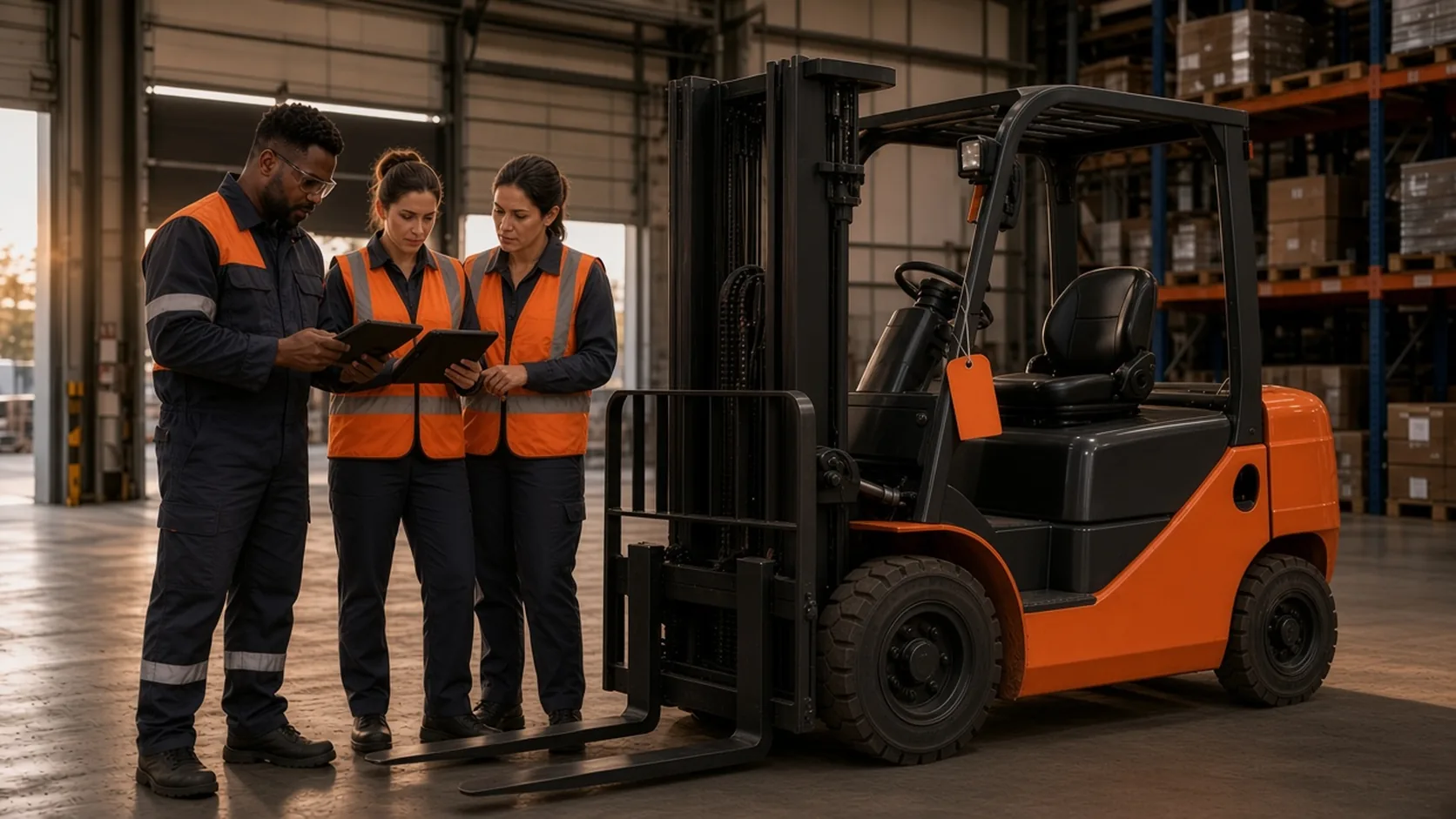
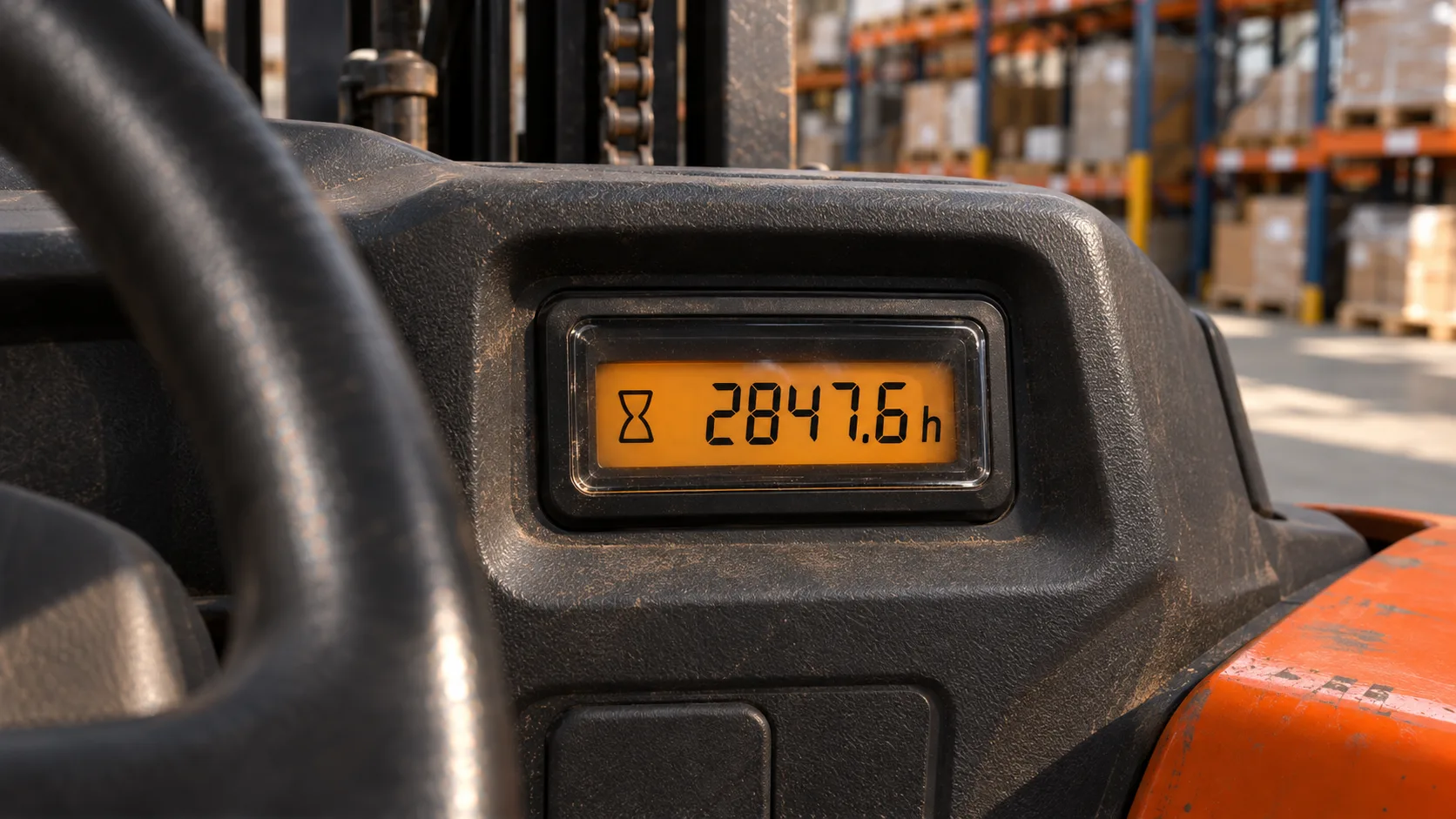
A technician arrives on site for a 500-hour service on a counterbalance truck. The job was booked because the fleet sheet said the machine was due. He climbs on, switches on and reads the hour meter.
It shows 1,870 hours. The last service record says 2,240.
Nobody has done anything wrong on purpose. The instrument cluster was replaced after a fault in June, and nobody wrote down the old and new readings on the day. Since then, the monthly hours column has been filled in by copying last month’s figure and adding a sensible-looking number. The truck may be overdue. It may be early. Standing in the aisle with a service kit in his hand, the technician cannot say which.
The hour meter is the quietest witness in the fleet
Most forklift service intervals are linked to operating hours as well as dates, because a machine working three shifts and one parked behind the racking do not wear at the same pace. The hour meter is what turns that principle into a due date.
It is also easy to overlook. It does not ring, send an email or join the morning call. It simply keeps counting, and the schedule is only as good as the last time someone read it properly and wrote it down against the right machine.
When forklift hour meter readings are reliable, planning becomes fairly calm. When they are not, every service date downstream is built on a number nobody can defend.
See how FMC keeps every asset, job and record connected.
Book a demoThree ways a reading goes quietly wrong
The first is the missing reading. A technician completes a breakdown repair and closes the job without noting the hours. The next reading on record is the planned service three months later, and the gap in between has to be guessed.
The second is the copied reading. Someone fills in a monthly sheet from the office rather than from the machine, or carries a figure forward from the previous job card because the truck was not at hand. A copied number looks exactly like a real one. That is the problem.
The third is the broken or replaced meter. Displays fail, clusters are swapped and occasionally a meter simply stops counting. If the change is not recorded, the history now contains two sets of numbers that do not add up, and the next person to look at it has no way to tell which one belongs to the machine.
A wrong number pushes the schedule both ways
It is tempting to assume a bad reading only causes late services. It can do that, and a hard-working truck can run well past its interval while the sheet says it has time to spare.
It can also bring work forward that did not need doing. A technician is sent out for a service that was not yet due, a machine is taken out of the shift for no good reason and the customer reasonably asks why. Neither outcome is dramatic on its own. Repeated across a fleet, both erode trust in the schedule, and once people stop trusting the schedule, they start working around it.
Readings belong to the moment, not to month-end
The most useful reading is the one taken while someone is standing next to the machine. A technician on a service or breakdown visit is already there, already looking at the truck and already completing a job record. Adding the hours at that point takes seconds.
The least useful reading is the one reconstructed later from memory, from a photograph on someone’s phone or from what the figure probably was. Month-end catch-ups have their place, but they should confirm the record, not invent it.
It also helps to agree what a sensible reading looks like. If a truck normally does around forty hours a week and the new figure implies four hundred, or a negative number, somebody should question it before it is accepted into the history.
When the meter changes, the record needs a line
Meter replacements are ordinary maintenance. They only become a problem when they are invisible. A short note on the day saying the old reading, the new reading and the reason is enough to keep the history honest.
Without that line, the machine appears to have travelled back in time, or jumped forward by a year. With it, anyone reviewing the asset later can follow the hours across both meters and work out where the next service really falls.
Hours say more than when the next service is due
Reliable forklift hour meter readings also show how the fleet is really being used. One truck may be doing twice the hours of its neighbour in the same aisle, while another barely moves from one week to the next. That is useful when deciding where machines should sit, which ones need attention first and which ones are standing more than anyone realised. None of it is visible from a column of copied figures.
Where FMC supports reliable readings
The FMC Technician Mobile App gives service teams an Android-compatible field tool for scheduled work, digital job capture, inspections, photographs, notes, readings and customer sign-off. Readings can be recorded while the technician is still on site, instead of being written up afterwards from memory, and QR identification helps confirm the correct asset before anything is captured.
Those records sit against the machine in FMC Asset Management, which maintains a dependable record of asset movements, updates, inspections and important lifecycle events. FMC Service Management then helps teams schedule routine maintenance around due dates, operating requirements and agreed service commitments.
The reading still comes from a person looking at the meter. FMC helps make sure that person’s note lands in the right place and stays there.
A practical starting point
You do not need to re-read the whole fleet this week. Start with the machines whose services matter most:
- Make an hour reading part of every service and breakdown job, not only planned services
- Record readings at the machine, not from the office or the previous job card
- Agree a rough expected range per machine and question readings that fall outside it
- When a meter or cluster is replaced, note the old reading, the new reading and the date
- Check the next due service on your busiest trucks against their latest real reading
A month of honest readings will tell you more about the fleet than a year of copied ones.
Back in the aisle, the technician would still find a replaced cluster. He would also find a note saying when it changed and what both meters read, and he could tell the site whether the service was due. That is a schedule worth trusting.
If the hours are not written down, the schedule is a guess. Write them down at the machine.
Want this level of visibility across your fleet?
Book a demo