


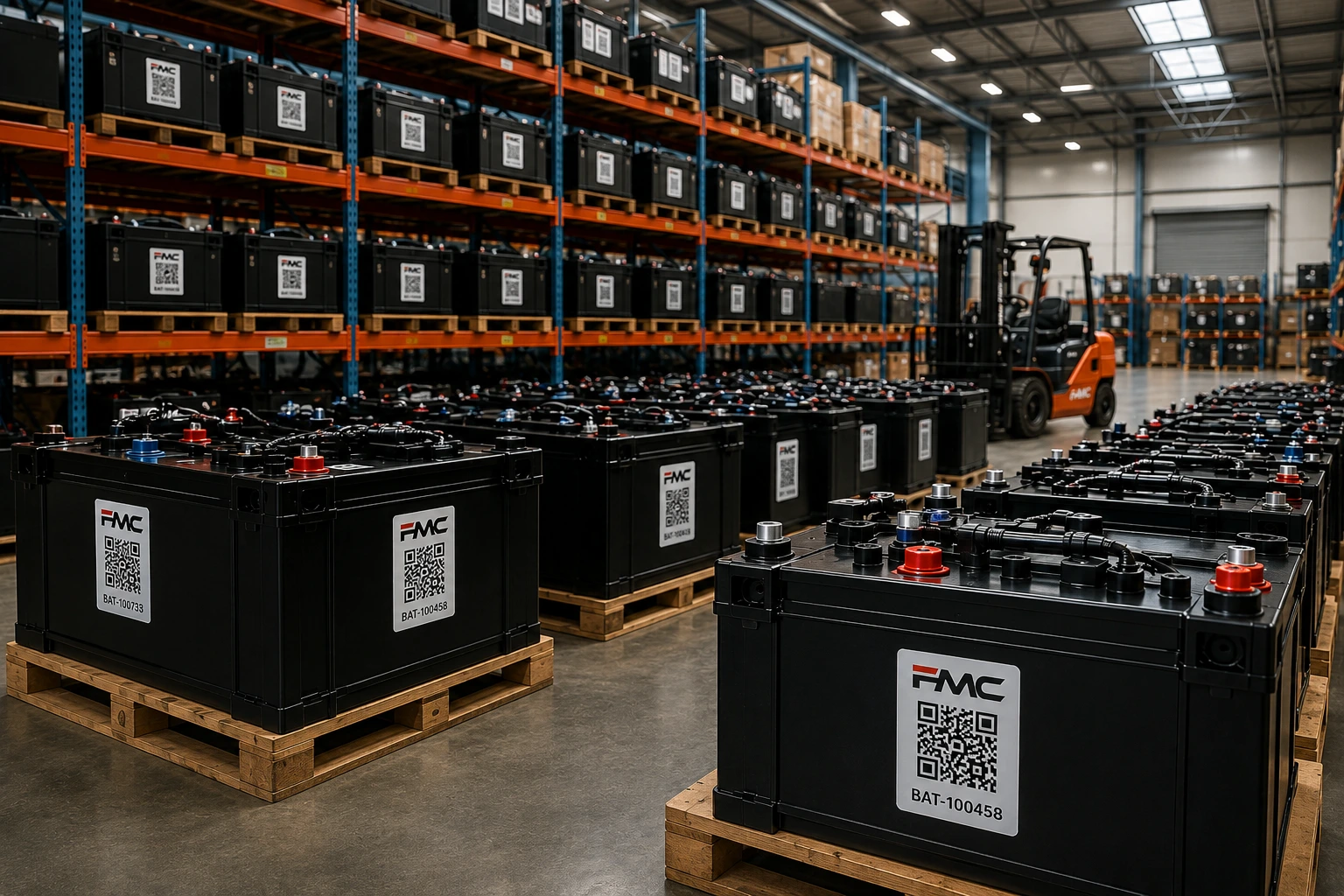
Most people know exactly where their phone is, its battery percentage, and when it was last charged. But can battery companies say the same about their battery assets? Discover why visibility is becoming the biggest competitive advantage in battery management.
Most Battery Companies Have a Visibility Problem
Let’s start with an uncomfortable question.
Do you know:
- Where your phone is?
- Its battery percentage?
- When you last charged it?
- Whether it’s due for an upgrade?
Probably.
In fact, most people can answer those questions in less than five seconds.
Now let’s try the same exercise with a battery asset in your business.
Do you know:
- Where it is right now?
- Which customer has it?
- Which site it’s operating at?
- When it was last serviced?
- When its warranty expires?
- Which technician worked on it last?
For many battery companies, those answers take considerably longer.
And that’s not because the operation is poorly run.
It’s because the industry has outgrown the tools it’s been using for years.
Batteries Have Become Business-Critical Assets
The battery industry has evolved.
Today’s battery suppliers aren’t simply selling batteries.
They’re managing:
- Service contracts
- Maintenance schedules
- Warranty claims
- Site installations
- Replacement programs
- Customer relationships
- Field technicians
In many cases, a battery company is effectively managing thousands of assets across multiple customer sites.
Yet many still rely on:
- Excel spreadsheets
- Email chains
- WhatsApp groups
- Paper service reports
The result?
Limited visibility.
The “Where Is That Battery?” Conversation
Every battery company has had it.
A customer phones.
They ask about a battery.
The office starts investigating.
Someone checks a spreadsheet.
Someone searches emails.
Someone calls a technician.
Someone looks for a job card.
Ten minutes later the answer is still unclear.
Not because the information doesn’t exist.
Because it’s scattered across multiple systems.
And every minute spent searching for information is time that could have been spent serving customers.
Batteries Don’t Stay Still
Unlike many fixed assets, batteries move.
They are:
- Installed
- Removed
- Swapped
- Repaired
- Replaced
- Sent for warranty inspection
Sometimes across multiple locations.
Without structured tracking, maintaining accurate records becomes increasingly difficult.
The larger the operation becomes, the bigger the challenge.

Service Management Gets Complicated Fast
Battery companies don’t just manage batteries.
They manage service events.
That means tracking:
- Preventative maintenance
- Repairs
- Site visits
- Warranty inspections
- Customer requests
- Replacement recommendations
As the customer base grows, spreadsheets become increasingly difficult to maintain.
Eventually, the business reaches a point where:
Information exists.
But visibility doesn’t.
The Warranty Headache
Warranty management is one of the biggest pain points in the industry.
A customer reports a failure.
The obvious questions follow:
- Is the battery still under warranty?
- Has maintenance been completed?
- Are service records available?
- Were recommendations followed?
The answers should be immediate.
Instead, they often require an investigation.
And investigations are expensive.
Technician Accountability Matters
Battery companies invest heavily in skilled technicians.
Yet management often lacks visibility into:
- Completed jobs
- Time on site
- Recommendations made
- Customer sign-offs
- Repeat visits
- Outstanding actions
This isn’t a technician problem.
It’s a visibility problem.
Without proper systems, valuable operational information becomes difficult to manage.
What Customers Expect Today
Customers no longer want reactive updates.
They expect answers.
Immediately.
They expect suppliers to know:
- Which assets they have
- Where those assets are
- When they were serviced
- What condition they’re in
- When attention is required
And frankly, they’re right to expect it.
This Is Why FMC Built a Battery Division Management Platform
Battery companies need more than spreadsheets.
They need operational visibility.
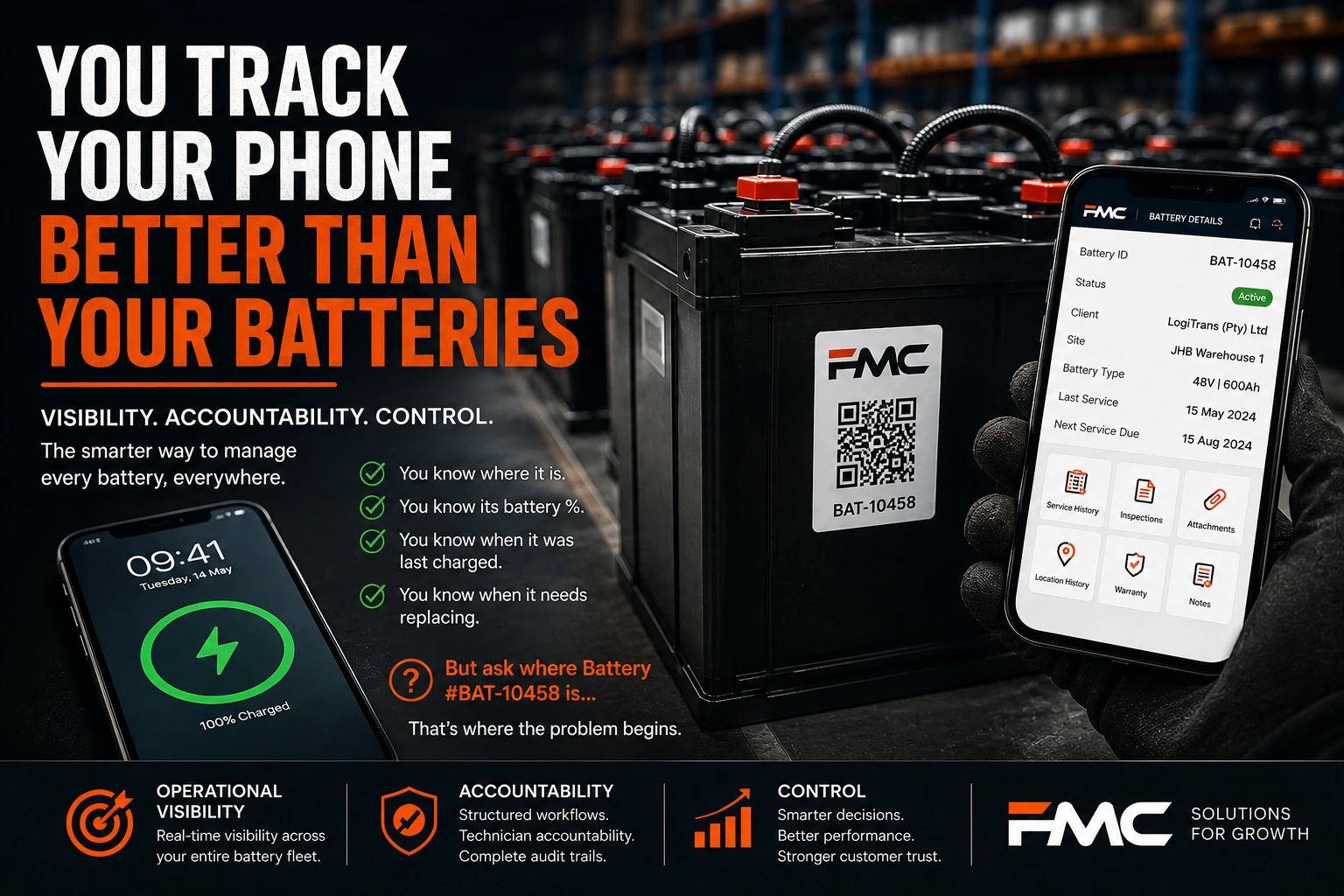
FMC’s Battery Division Management Platform provides:
QR Code Asset Tracking
Instant identification and history.
Service & Maintenance Management
Track every service, inspection, repair and recommendation.
Customer & Site Management
Manage multiple clients and locations from one platform.
Warranty & Lifecycle Visibility
Monitor warranty status, lifecycle stage and replacement planning.
Technician Accountability
Structured workflows and service history.
Operational Dashboards
Real-time visibility across the entire business.
Visibility Changes Everything
When battery companies gain visibility:
- Customer service improves
- Technician accountability improves
- Warranty management improves
- Operational efficiency improves
- Growth becomes easier to manage
Most importantly:
Management gains control.
Final Thought
Your phone knows:
- Where it is.
- Its battery level.
- Its history.
- Its status.
Your battery fleet should too.
Because in today’s world, there is no reason to track your phone better than your batteries.
And that’s exactly why FMC exists.