
Why Forklift Procurement Decisions Should Never Be Left to Suppliers Alone

Forklift procurement is one of the most financially impactful decisions an operation makes — yet in many businesses, these decisions are effectively outsourced to suppliers. Quotations are requested, recommendations are made, and equipment is delivered with minimal independent analysis.
While forklift suppliers play a critical role in the industry, they are not independent advisors. Their primary function is to sell equipment, contracts, and services. When procurement decisions are left entirely to suppliers, businesses unintentionally expose themselves to higher costs, operational inflexibility, and long-term inefficiency.
This article explains why supplier-led procurement creates risk, how bias enters procurement decisions, and how independent oversight leads to better fleet performance and cost control.

Understanding the Role of Forklift Suppliers
Forklift suppliers are specialists in:
- Equipment sales
- Rentals and leasing
- Maintenance contracts
- Parts and service support
These services are essential. However, supplier recommendations are shaped by:
- Product portfolios
- Contract structures
- Revenue models
- Inventory strategy
This does not imply bad intent — it simply means suppliers are commercially incentivised.
How Supplier Bias Enters Forklift Procurement
Supplier bias is rarely overt. It usually appears subtly, through:
- Recommendations that favour specific brands or models
- Preference for longer-term contracts
- Emphasis on new equipment over optimisation
- Limited discussion of alternatives
Without independent benchmarking, these recommendations are difficult to challenge.
The Over-Specification Trap
One of the most common outcomes of supplier-led procurement is over-specification.
Examples include:
- Higher-capacity forklifts than required
- Advanced features with limited operational value
- New equipment replacing serviceable assets
Over-specification increases capital cost, maintenance expense, and operational complexity without delivering proportional benefit.
Why Fleet Size Often Grows Unnecessarily
Suppliers are rarely incentivised to recommend fewer forklifts.
As a result:
- Underutilised equipment remains in the fleet
- Rental units stay on hire indefinitely
- Peak demand assumptions become permanent
Without utilisation analysis, fleet size gradually increases — and so do costs.
Procurement Decisions Are Often Made in Isolation
In many organisations, procurement decisions are disconnected from:
- Actual forklift usage
- Maintenance performance data
- Downtime impact
- Safety considerations
This disconnect leads to decisions based on price, availability, or relationships rather than operational reality.
The Long-Term Cost of Supplier-Led Procurement
Supplier-led procurement can lock businesses into:
- Inflexible contracts
- High exit penalties
- Limited ability to resize fleets
- Misaligned maintenance obligations
These costs are often hidden within monthly charges and only become visible when change is required.
Why “Best Price” Is Rarely Best Value
Procurement processes often focus heavily on price comparisons. However, the cheapest quote rarely delivers the lowest total cost.
True cost includes:
- Utilisation efficiency
- Downtime impact
- Maintenance reliability
- Contract flexibility
- End-of-term outcomes
Supplier-led decisions often optimise price — not value.
The Risk of Single-Supplier Dependency
Relying on a single supplier for procurement, maintenance, and advice concentrates risk.
Single-supplier dependency can result in:
- Reduced negotiating leverage
- Limited performance accountability
- Difficulty benchmarking service levels
- Higher switching costs
Independent oversight introduces balance and control.
What Independent Forklift Procurement Looks Like
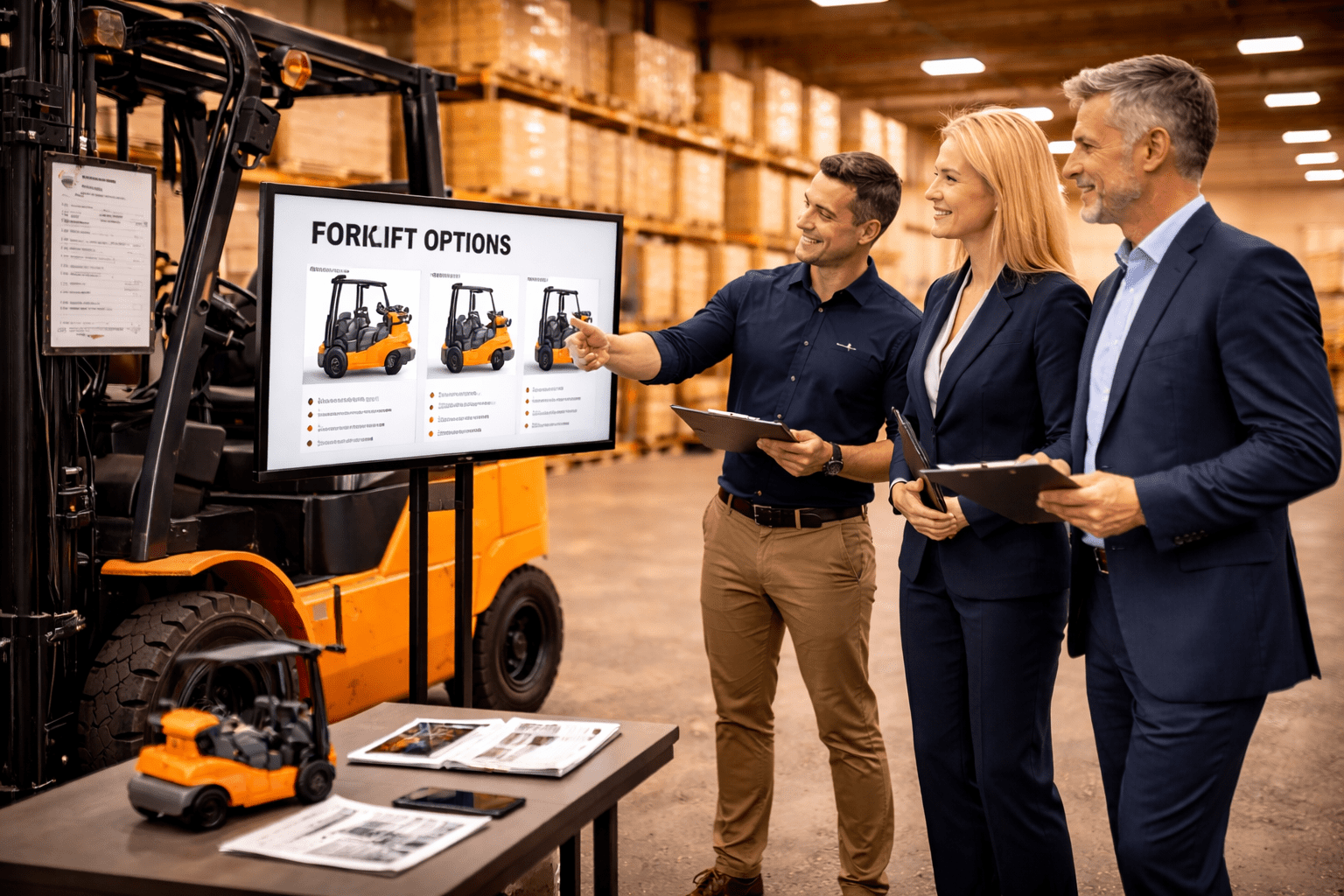
Independent procurement separates decision-making from supply.
This approach includes:
- Fleet utilisation analysis
- Specification validation
- Competitive benchmarking
- Contract risk assessment
- Lifecycle cost modelling
Suppliers still provide equipment and service — but within a framework defined by the business, not the supplier.
The Role of Data in Objective Procurement Decisions
Data transforms procurement from opinion-based to evidence-based.
Key data points include:
- Usage hours per forklift
- Failure frequency
- Cost per operating hour
- Downtime patterns
- Safety incident trends
With this information, procurement decisions become defensible and measurable.
How Independent Procurement Improves Supplier Relationships
Contrary to common belief, independent oversight often improves supplier relationships.
Clear expectations, transparent performance metrics, and fair evaluation:
- Reduce disputes
- Improve service quality
- Align incentives
- Strengthen long-term partnerships
Good suppliers perform best in structured, accountable environments. Suppliers provide critical expertise in:
- Technical specifications
- Application suitability
- Regulatory requirements
- New technology
The key difference is who controls the decision.
Conclusion: Procurement Control Is a Strategic Advantage
Forklift procurement decisions shape fleet performance for years. Leaving these decisions entirely to suppliers transfers control, visibility, and leverage away from the business.
Independent forklift procurement does not replace suppliers — it ensures procurement decisions serve the operation first.