


Excel Is Not a Fleet Management System (No Matter How Many Tabs You Add)

Somewhere in South Africa, right now, a forklift compliance audit is failing — not because the business doesn’t care about safety, uptime, or cost control… …but because the spreadsheet didn’t get updated.
Again.
If this sounds familiar, you’re not alone. For years, companies across warehousing, manufacturing, logistics, and agriculture have been using spreadsheets to manually manage:
- Service schedules
- Maintenance contracts
- Technician call-outs
- Overtime and rework
- Load tests and inspections
- Compliance documentation
And for a while… it kind of worked.
Until it really, really didn’t.

The Spreadsheet Dream vs the Operational Reality
On paper (or rather, on Sheet 7), it looks great:
- “All contracts are tracked”
- “Service schedules are up to date”
- “Compliance is under control”
- “We know which forklifts are down”
In reality?
- The spreadsheet lives on one person’s laptop
- Half the dates are manually updated
- Version_Final_v12.xlsx is not actually final
- Technicians log jobs after the fact
- Load test certificates are “somewhere in the email trail”
And when that person is on leave… the operation is flying blind.
Where Spreadsheets Start to Break (Quietly)
Spreadsheets don’t usually fail dramatically. They fail silently.
🔧 Service & Maintenance
- Services missed because dates weren’t updated
- Breakdowns logged late (or not at all)
- Repeat failures because history isn’t visible
👷 Technicians & Labour
- Overtime approved reactively
- Rework not tracked back to root cause
- No visibility into technician efficiency or repeat call-outs
📋 Contracts & SLAs
- Response times measured “roughly”
- No real SLA enforcement
- Contracts renewed out of habit, not performance
⚖️ Compliance & Load Tests
- Certificates expire unnoticed
- Inspection records incomplete
- Auditors asking questions spreadsheets cannot answer
And then comes the audit.
The Audit Moment: When Excel Is Put on Trial
Auditors don’t care how good your spreadsheet looks.
They care about evidence, traceability, and consistency.
That’s when things unravel:
- “Can you show proof this forklift was compliant on this date?”
- “Where is the load test certificate for Unit F23?”
- “Why was this service missed?”
- “Who signed off this inspection?”
Suddenly:
- Dates don’t line up
- Documents are missing
- Responsibility is unclear
And Excel — loyal as it tried to be — offers no defence.

The Real Problem Isn’t Excel (It’s the Job You’re Asking It to Do)
Excel is fantastic for:
- Calculations
- Analysis
- One-off reporting
It is not designed to:
- Manage live fleets
- Track real-time breakdowns
- Enforce SLAs
- Manage compliance risk
- Coordinate multiple suppliers and technicians
At scale, spreadsheets don’t manage operations — they document chaos after the fact.
Why This Has Been “Normal” for So Long
The forklift and materials-handling industry has lagged behind in independent management tools.
For years, businesses had two options:
- Let suppliers “manage” everything
- Build internal spreadsheet systems to stay in control
Option 1 = loss of independence
Option 2 = operational risk disguised as control
Neither was ideal.
Until now.
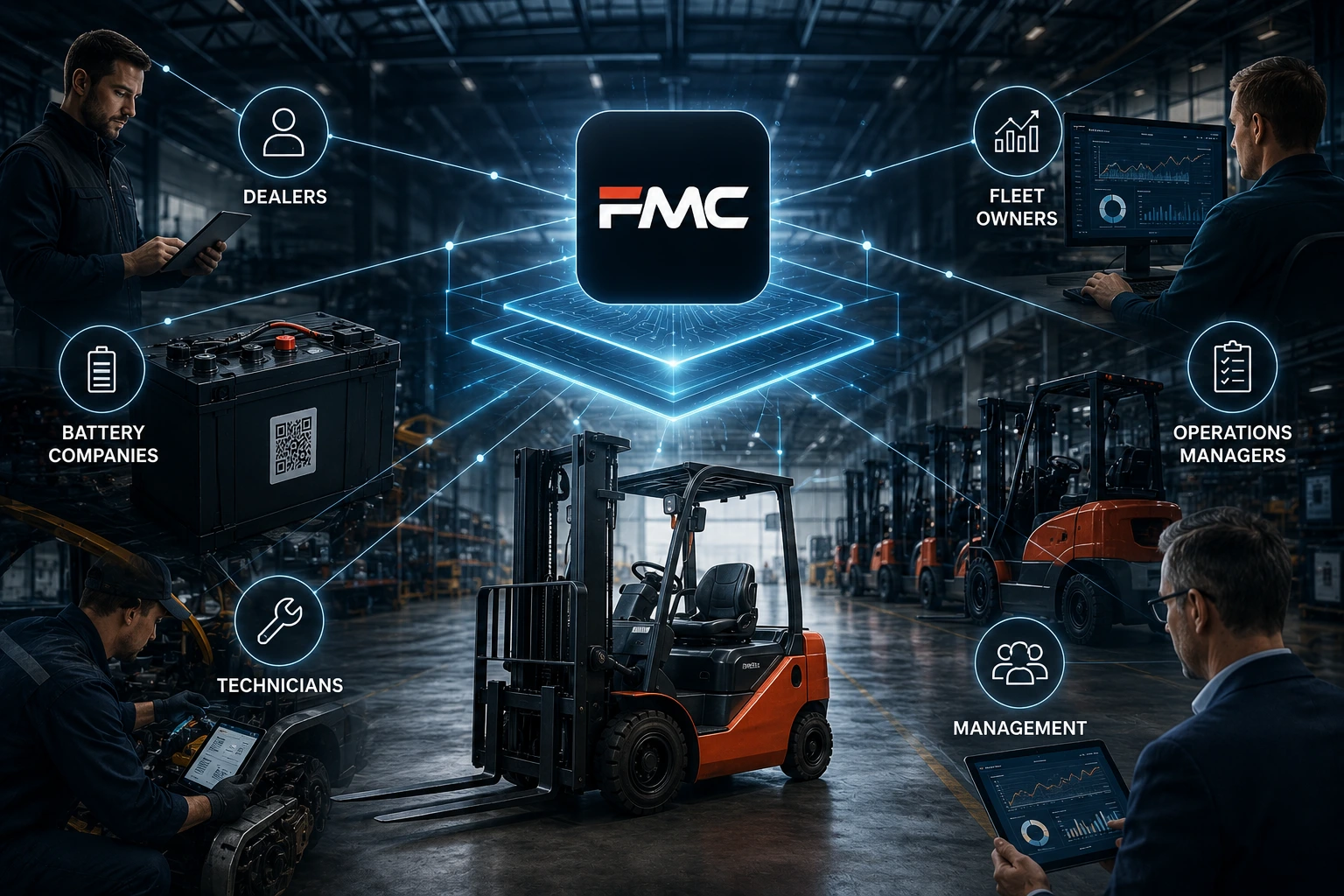
Enter FMC: The System the Industry Has Been Waiting For
FMC exists because spreadsheets were never meant to carry this much responsibility.
Instead of manually juggling:
- Contracts
- Service schedules
- Breakdowns
- Technicians
- Load tests
- Compliance audits
FMC provides:
- Centralised, live fleet visibility
- Automated service and compliance tracking
- Independent SLA monitoring
- Clear audit trails
- Real-time insight across sites, suppliers, and assets
No version control issues.
No “who last updated this?”
No panic the week before an audit.
From “Hope We’re Compliant” to “We Know We Are”
With FMC:
- Load tests don’t expire quietly
- Services aren’t missed accidentally
- Breakdowns are tracked, not guessed
- Overtime and rework are visible
- Audits become confirmations — not investigations
- Most importantly, management regains control.
The Inevitable Question: “Why Didn’t We Do This Earlier?”
Every FMC client says some version of:
“We thought our spreadsheets were good enough… until they weren’t.”
The truth?
They never were — they were just the best available option at the time.
Now, there’s a better one.
Final Thought: Excel Had a Good Run
Spreadsheets helped the industry survive complexity.
But survival is not optimisation.
And documentation is not management.
If your fleet, contracts, technicians, and compliance still depend on someone remembering to update a cell — the risk isn’t theoretical anymore.
FMC is not a nicer spreadsheet.
It’s the system the industry has been quietly waiting for.