Forklift Compliance in South Africa: What Your Business Is Legally Responsible For

Forklift compliance is one of the most misunderstood areas of materials handling management in South Africa. Many businesses believe that compliance is handled by suppliers, rental companies, or maintenance contractors. Others assume that having a service contract in place automatically ensures legal compliance.
In reality, forklift compliance is a legal responsibility that rests squarely with the employer and end user. Delegating tasks does not delegate accountability. When incidents occur, regulators and insurers do not pursue suppliers first — they pursue the business that operates the equipment.
This article explains what forklift compliance in South Africa really means, what your business is legally responsible for, where companies commonly fall short, and how structured compliance management reduces risk, downtime, and liability.
Understanding Forklift Compliance in South Africa
Forklifts are classified as powered machinery and fall under South Africa’s occupational health and safety framework. Compliance is not a once-off requirement but an ongoing management obligation.
Forklift compliance covers three broad areas:
- Equipment condition and certification
- Operator competence
- Safe operating environment
All three must be addressed consistently to meet legal and insurance requirements.
The Legal Framework Governing Forklift Use
Forklift operations are regulated under South African occupational health and safety legislation, supported by applicable standards and industry best practice. These regulations require employers to ensure that:
- Equipment provided is safe and fit for purpose
- Hazards are identified and controlled
- Employees are trained and competent
- Machinery is properly maintained and inspected
Importantly, responsibility cannot be transferred. Even if inspections, training, or maintenance are outsourced, the employer remains accountable for compliance.
Employer Responsibilities Explained Clearly
Many compliance failures stem from uncertainty about what is actually required. At a minimum, employers must ensure the following are in place and kept up to date.
Forklifts must undergo regular inspections and load testing by competent persons. Certificates must be:
- Valid
- Site-specific where required
- Readily available for audits or inspections
Expired or missing certificates are one of the most common compliance failures identified during audits.
Maintenance must be:
- Planned
- Documented
- Traceable
Incomplete service records, undocumented repairs, or inconsistent maintenance intervals weaken compliance and create exposure during incidents or insurance claims.
Operators must be:
- Trained on the specific type of forklift they operate
- Declared medically fit
- Assessed as competent
A licence alone is not sufficient if refresher training, supervision, or task-specific instruction is lacking.
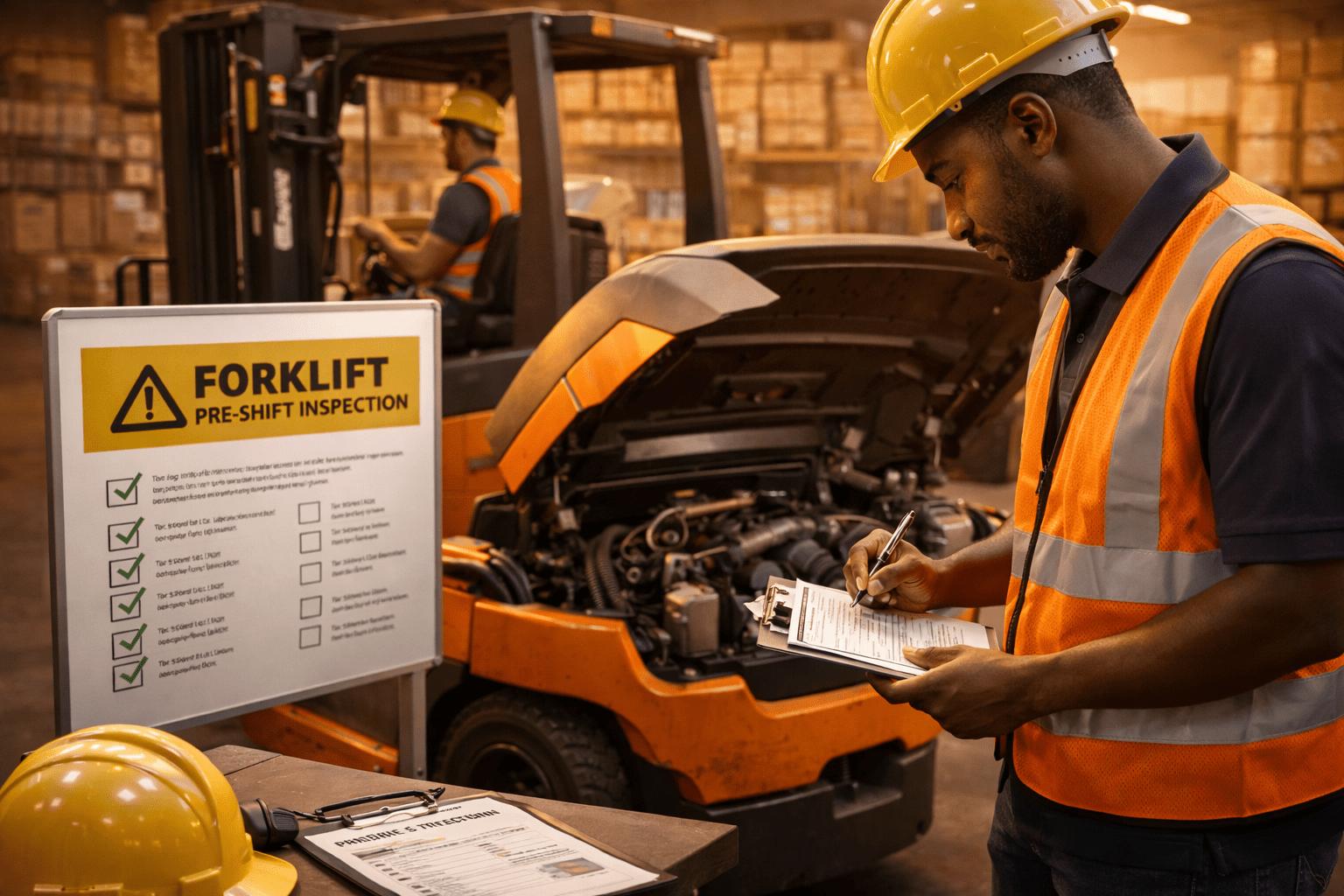
Operators are required to complete daily pre-use checks. These inspections:
- Identify safety defects early
- Reduce incident risk
- Provide evidence of due diligence
When inspections are skipped or treated as a tick-box exercise, defects remain undetected until failure occurs.
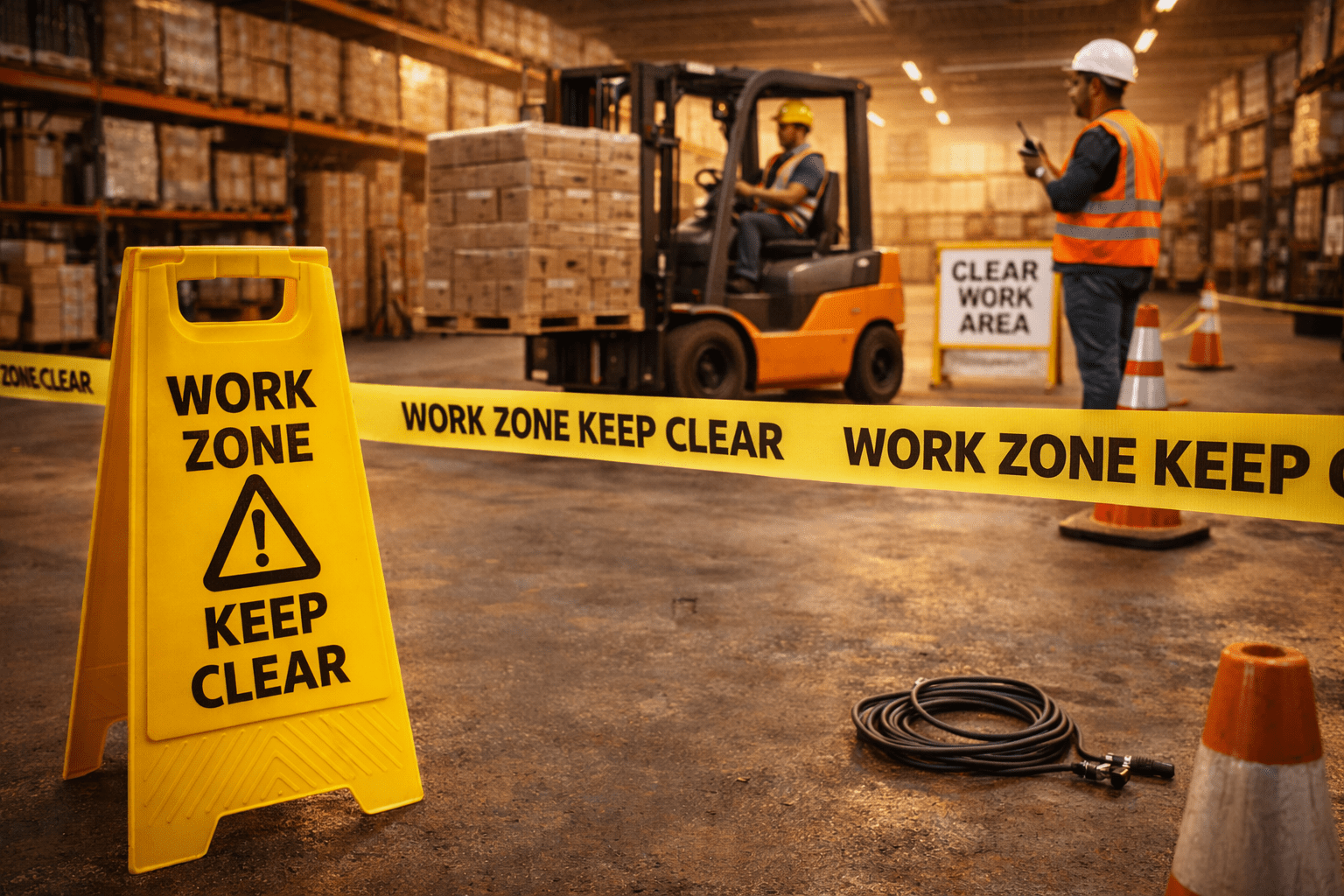
Compliance does not stop with the forklift itself. Employers must also ensure:
- Adequate traffic management plans
- Pedestrian separation where required
- Suitable floor conditions
- Clear signage and demarcation
Unsafe environments invalidate even the best equipment and training.
Common Forklift Compliance Failures in South Africa
Despite good intentions, many businesses fall short in predictable ways.
Typical compliance gaps include:
- Expired load test certificates
- Incomplete or missing maintenance records
- Operators licensed but not site-specific trained
- No central compliance tracking system
- Over-reliance on suppliers for compliance oversight
These gaps often go unnoticed until an audit, incident, or insurance claim exposes them.
Why Compliance Often Breaks Down in Multi-Site Operations
Compliance challenges multiply as businesses grow. Multi-site operations often struggle with:
- Inconsistent standards between sites
- Decentralised record keeping
- Multiple suppliers applying different processes
- Limited visibility at head office level
Without central oversight, compliance becomes fragmented and unreliable.
Compliance vs Safety: Why They Are Not the Same Thing
Compliance sets minimum legal standards. Safety requires continuous improvement beyond compliance.
A business can technically be compliant and still experience incidents if:
- Unsafe behaviours go unchallenged
- Near misses are ignored
- Equipment selection is inappropriate for tasks
High-performing operations treat compliance as the baseline — not the end goal.
The Financial and Operational Cost of Non-Compliance
Non-compliance carries consequences that extend far beyond fines.
Potential impacts include:
- Regulatory penalties and improvement notices
- Work stoppages or site shutdowns
- Insurance claim rejections
- Legal liability following incidents
- Reputational damage with clients and regulators
In many cases, the indirect costs of non-compliance far exceed the cost of proactive compliance management.
How Structured Forklift Compliance Management Reduces Risk
Effective compliance management is proactive and structured, not reactive.
Best-practice compliance management includes:
- Centralised compliance tracking
- Scheduled audits and inspections
- Independent verification of supplier performance
- Clear accountability at management level
- Regular reporting and review
This approach provides assurance, consistency, and defensibility in the event of scrutiny.
Why Independent Oversight Strengthens Compliance
Suppliers play an important role, but supplier-led compliance often focuses narrowly on equipment, not operational reality.
Independent oversight:
- Identifies gaps suppliers may overlook
- Ensures consistency across sites
- Aligns compliance with operational risk
- Protects the employer’s legal position
This separation is especially important in high-risk or multi-site environments.
Conclusion: Forklift Compliance Is a Management Responsibility
Forklift compliance in South Africa is not a supplier function, a maintenance issue, or a paperwork exercise. It is a management responsibility that requires structure, oversight, and accountability. Businesses that manage compliance proactively protect their people, their operations, and their reputation — while those that rely on assumptions expose themselves to unnecessary risk.