


Technician Accountability in Fleet Management: The Hidden Cost You’re Missing
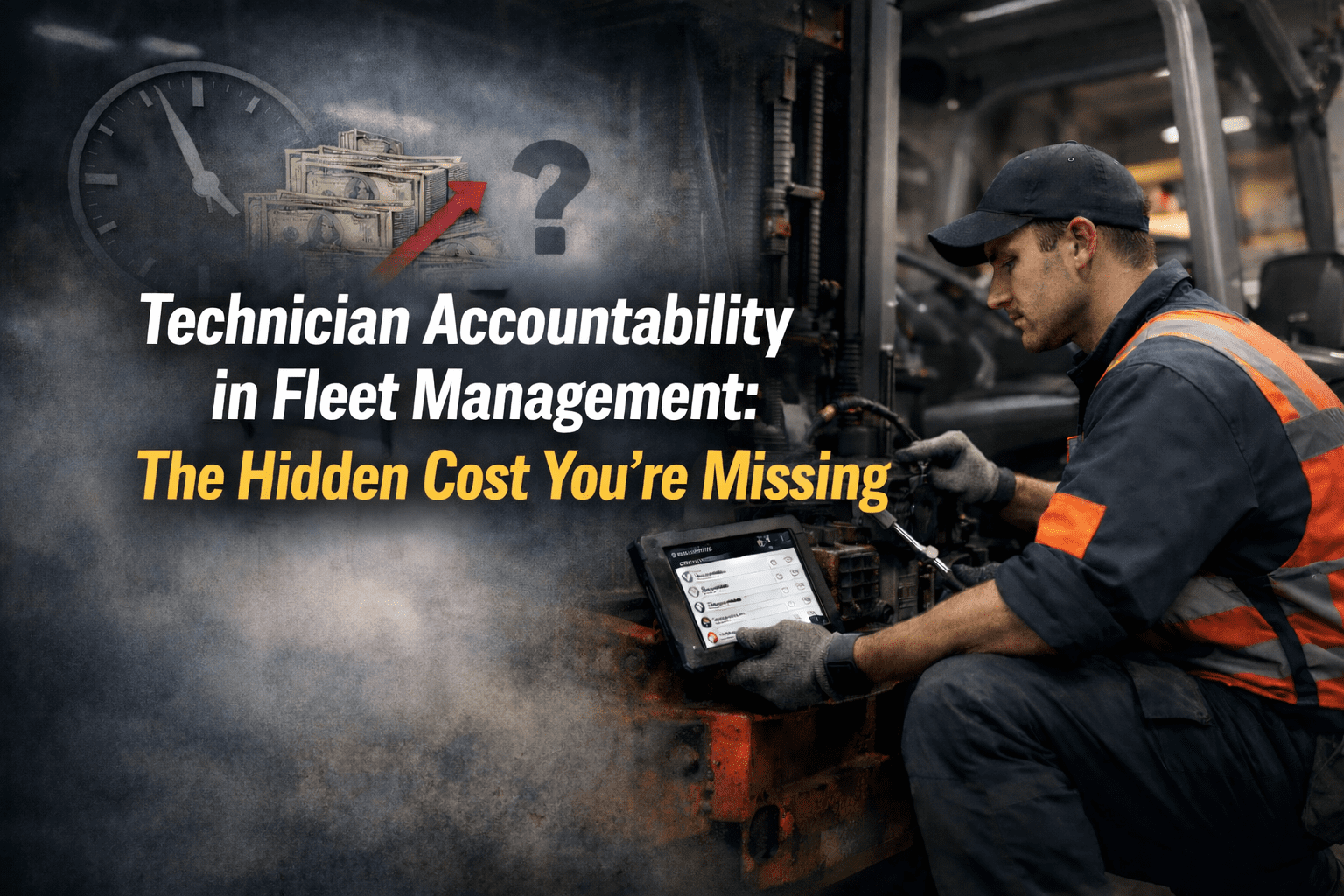
In fleet management, there’s a quiet assumption that once a technician is dispatched, the job will be done correctly, efficiently, and honestly. But in reality… that’s often where the biggest risks begin.
The Invisible Gap in Fleet Operations
Most businesses have:
- Service contracts
- Approved suppliers
- Maintenance schedules
On paper, everything looks controlled.
But what actually happens on-site?
That’s where visibility disappears.
Technicians arrive, work gets done (or not), parts are used (or not), time is logged (accurately or not)… and the only record is a job card submitted later — often filled in after the fact.

The Cost of Poor Technician Accountability
When technician activity isn’t properly tracked and verified, the impact is significant:
- Over-servicing or unnecessary repairs
- Incorrect parts billed
- Inflated labour hours
- Missed or incomplete maintenance tasks
- Disputed work approvals
- Recurring breakdowns from unresolved issues
And the worst part?
Most of it goes unnoticed.
Not because businesses don’t care — but because they don’t have the tools to see it.
“We Trust Our Suppliers” — But Should You Rely on That Alone?
Strong supplier relationships are important.
But accountability should never rely on trust alone.
Even the best service providers operate across:
- Multiple technicians
- Different regions
- Varying levels of experience
Without structured oversight, consistency breaks down.
And when it does, your fleet performance pays the price.
What Real Technician Accountability Looks Like
True accountability isn’t about micromanagement.
It’s about visibility, verification, and control.
That means:
1. On-Site Job Transparency
Work completed is logged in real time
Tasks are clearly defined and tracked
2. Digital Authorisation
Customers approve work on-site before it happens
No more “he said, she said” disputes later
3. Parts & Labour Validation
Parts used are recorded and verified
Labour hours are tracked against actual activity
4. Photo & Evidence Capture
Before-and-after images
Proof of completed work
5. Centralised Oversight
All service activity visible across your entire fleet
Not scattered across emails, PDFs, and supplier systems

The Shift From Reactive to Controlled Operations
Most fleets operate reactively:
- Breakdowns happen
- Technicians are called
- Costs are accepted
But with proper accountability, that changes:
You move to:
- Measured performance
- Verified service delivery
- Data-driven decision-making
Where FMC Fits In
At FMC, we don’t replace your suppliers.
We make sure they perform.
Our platform and consulting approach introduce:
- Independent oversight
- Real-time service tracking
- Digital job validation
- Full visibility into technician activity
Because fleet performance shouldn’t depend on assumptions.
It should be backed by data.
Final Thought
If you can’t see what’s happening on-site…
you’re not managing your fleet — you’re funding it.


