

The Fleet Management Problem No One Is Talking About

Across industries — logistics, warehousing, manufacturing, agriculture, ports, and distribution — fleets are the operational backbone of the business.
Forklifts. Yard equipment. Industrial vehicles. Material handling machines.
They move goods.
They drive productivity.
They keep operations running.
Yet despite their importance, fleet management in most organisations is still surprisingly fragmented.
Not because businesses don’t care about their fleets.
But because the systems used to manage them were never designed for the complexity of modern operations.

The Industry Problem
In many operations today, fleet management is still handled through a patchwork of tools and processes:
- Spreadsheets maintained by individual departments
- Manual service schedules tracked through emails and reminders
- Reactive breakdown management
- Unmonitored service contracts
- Limited visibility into true cost per machine
- Compliance documentation stored across multiple systems
At first glance, these processes appear functional.
Machines get serviced.
Technicians attend breakdowns.
Invoices get paid.
But beneath the surface, something critical is missing.
Visibility.
Without a centralised view of fleet performance, organisations struggle to answer fundamental operational questions:
- What is the real uptime of our fleet?
- Which machines are underperforming?
- Are service providers meeting contractual SLAs?
- What is the true lifecycle cost of each asset?
- Which machines are underutilised and which are overworked?
- Are we compliant across every site and asset?
In most organisations, the answers exist — but they are scattered across systems, suppliers, and spreadsheets.
The result is predictable.
Escalating costs.
Downtime frustration.
Supplier dependency.
Audit risk.
And very little measurable performance data.
Fleet management has become increasingly complex.
But complexity should not mean chaos.
The Hidden Cost of Reactive Fleet Management
When fleet oversight is fragmented, organisations are forced into a reactive posture.
Breakdowns drive decisions.
A machine fails.
A technician is called.
Parts are ordered.
A rental unit is added temporarily.
Over time, these reactions accumulate into structural inefficiency:
- Oversized fleets
- Rising maintenance costs
- Duplicate equipment
- Poor utilisation
- Contracts renewed without performance review
These costs rarely appear immediately.
They emerge gradually — hidden in operating expenses, service invoices, overtime labour, and lost productivity.
The fleet becomes an expense centre rather than a controlled operational asset.
The Visibility Gap
The real issue facing fleet-intensive organisations today is not maintenance.
It is operational oversight.
- Most businesses have service providers.
- Most businesses have contracts.
- Most businesses have reporting.
What they often lack is an independent, consolidated view of the entire fleet ecosystem.
Data lives in different places:
- Supplier dashboards
- Internal spreadsheets
- Maintenance reports
- Compliance files
- Site-level systems
Without integration, this information cannot support strategic decision-making.
And when visibility is fragmented, governance becomes impossible.

The FMC Solution
This is where FMC changes the equation.
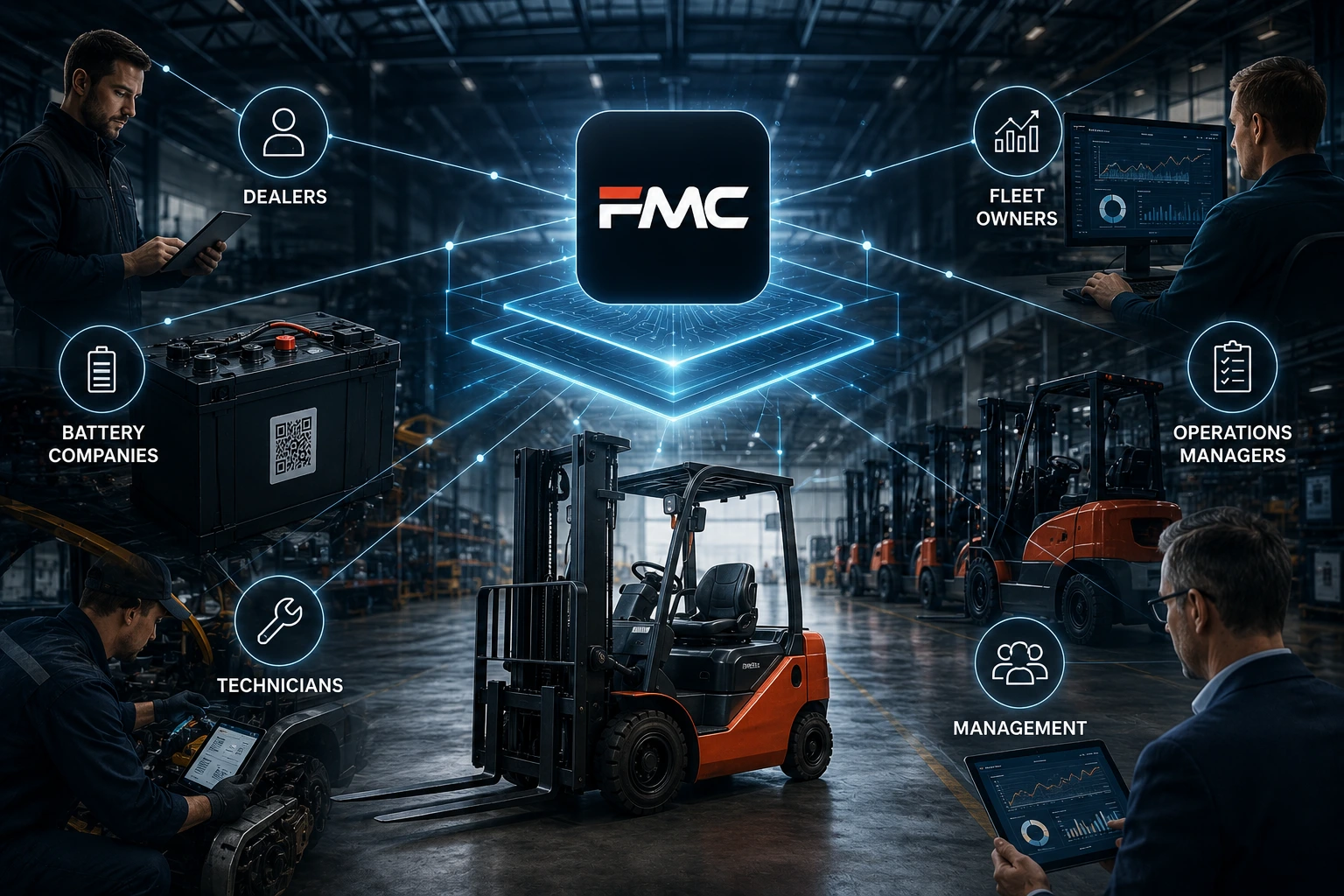
Forklift Management Consulting (FMC) provides an independent layer of operational oversight and structured fleet governance.
Rather than relying on fragmented reporting or supplier-controlled data, FMC consolidates fleet information into a single, objective operational view.
Through a combination of consulting expertise and technology-enabled tools, FMC introduces:
Independent fleet oversight
A neutral layer that monitors fleet performance beyond supplier reporting.
Structured fleet governance
Clear frameworks for managing assets, contracts, compliance and performance.
Real-time operational visibility
Centralised dashboards that provide clear insight into fleet activity and uptime.
Performance measurement
Objective tracking of service levels, downtime and asset utilisation.
Cost control analytics
Visibility into lifecycle costs and operational efficiency across the fleet.
Compliance monitoring
Proactive oversight of safety, inspection and regulatory requirements.
Technology-enabled reporting
Executive-level insights that transform operational data into strategic intelligence.
From Expense Centres to Operational Assets
When organisations gain visibility over their fleets, something important happens.
Behaviour changes.
Service providers become accountable.
Contracts are reviewed using data.
Asset utilisation improves.
Compliance risks decline.
Operational decisions become informed rather than reactive.
Most importantly, fleets shift from being perceived as unpredictable cost centres to becoming measurable operational assets.
A New Standard for Fleet Management
As operations become more complex, the traditional model of fleet management is reaching its limits.
Spreadsheets cannot scale across multi-site operations.
Manual oversight cannot manage hundreds of assets.
Fragmented data cannot support strategic decisions.
The future of fleet management requires something different:
- Independent oversight
- Structured governance
- Real-time operational visibility
- Data-driven decision making
Organisations that adopt these principles gain more than efficiency.
They gain control.
The Bottom Line
Fleet management does not have to be chaotic.
With the right oversight, the right governance framework, and the right visibility tools, fleets can become one of the most controlled and measurable parts of an organisation’s operations.
The question is no longer whether fleets are important.
The question is whether they are truly being managed — or simply maintained.
About FMC
Forklift Management Consulting (FMC) provides independent fleet oversight, governance frameworks and technology-enabled visibility to help organisations transform their fleets into measurable operational assets.