

The Hidden Safety Risks Lurking in “Working” Forklifts

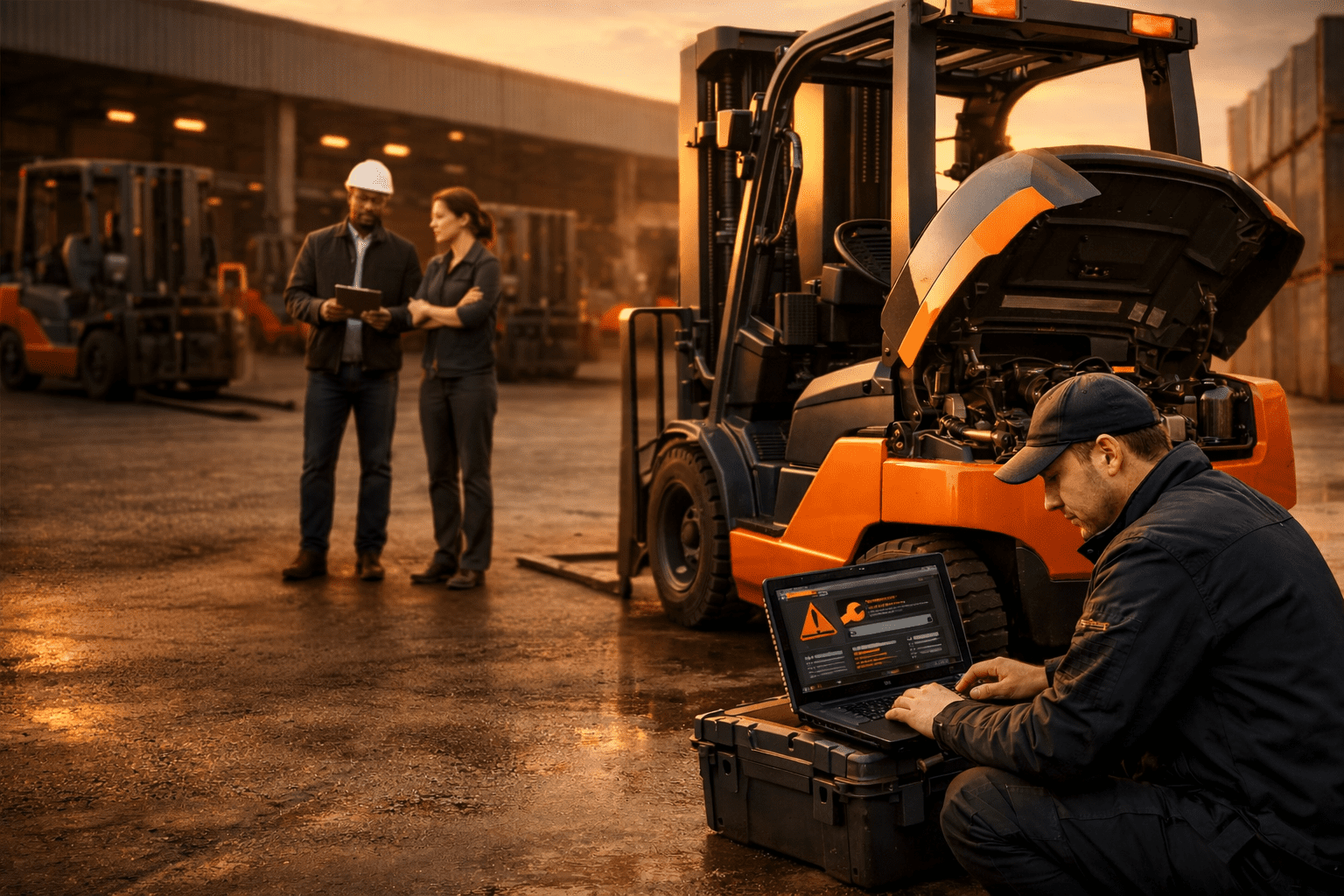
At first glance, a forklift that starts, drives, lifts, and lowers appears to be safe. In many operations, this assumption becomes the unofficial standard: if the forklift is working, it is considered fit for use. Unfortunately, this belief is one of the most common contributors to forklift-related incidents in warehouses, factories, and distribution centres.
The reality is that many serious forklift accidents are caused not by catastrophic mechanical failure, but by hidden or ignored safety defects. These issues often develop gradually and remain undetected because the forklift continues to operate — until a critical moment exposes the risk.
This article explores the hidden safety risks that exist in “working” forklifts, why they are so often overlooked, and how structured forklift management reduces both incident risk and operational disruption.
Why “Operational” Does Not Mean “Safe”
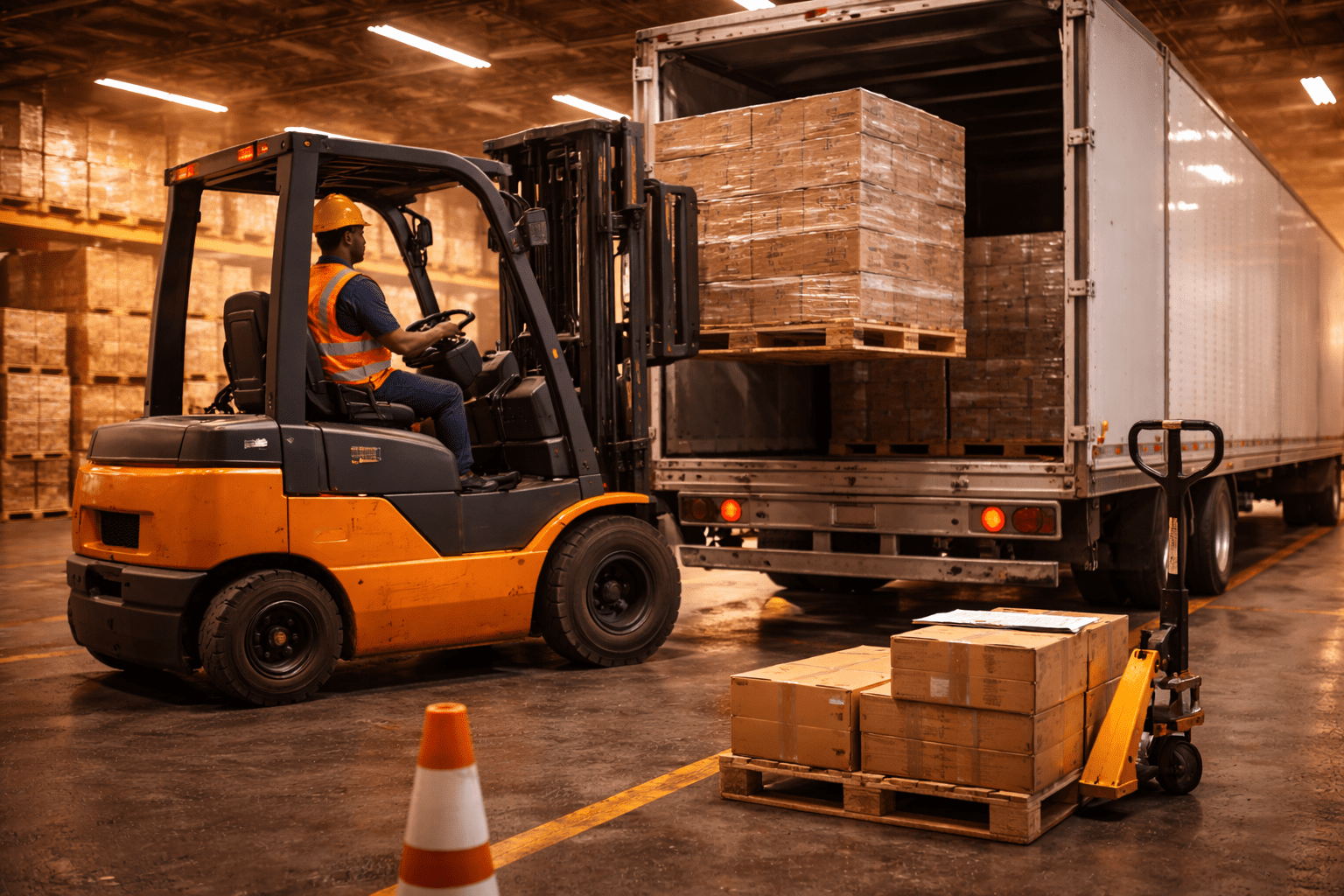
Forklifts are designed to keep working even when components are worn, misaligned, or partially defective. This resilience, while valuable operationally, creates a false sense of security.
A forklift can:
- Move with worn brakes
- Lift with damaged forks
- Operate with compromised safety interlocks
- Function with reduced steering accuracy
Because failure is gradual rather than sudden, defects are often tolerated as “normal” — until an incident occurs.
The Most Common Hidden Safety Risks in Forklifts
Hidden risks rarely announce themselves clearly. Instead, they appear as small performance changes that are easy to dismiss.
Brake wear is one of the most dangerous hidden risks. Forklifts operating in busy environments require predictable stopping distances.
Signs often ignored include:
- Longer stopping distances
- Soft or inconsistent brake pedal feel
- Brake fade during longer shifts
In pedestrian-heavy environments, worn brakes dramatically increase collision risk.
Forks are load-bearing components subject to constant stress. Damage often goes unnoticed because:
- Forks appear visually intact
- Deformation is subtle
- Wear occurs gradually
Worn or cracked forks can fail under load, leading to dropped loads, tip-overs, or structural collapse.
Seat switches, dead-man pedals, and safety interlocks are designed to prevent uncontrolled movement. When these systems are bypassed or malfunctioning:
- Forklifts may move without an operator correctly seated
- Unintended movement becomes possible
- Control is reduced during emergency situations
Bypassed safety systems are a common but serious compliance and safety failure.
Steering wear often develops slowly. Increased play or reduced responsiveness may be dismissed as “normal,” particularly in older fleets.
This degradation:
- Reduces operator control
- Increases fatigue
- Makes precise manoeuvring difficult in tight aisles
In high-density storage environments, steering accuracy is critical to preventing collisions and racking damage.
Tyres directly influence forklift stability. Worn, damaged, or inappropriate tyres:
- Increase stopping distances
- Reduce traction
- Compromise load stability
Floor conditions and tyre selection must work together. Mismatches increase both accident risk and mechanical stress.
Why Operators Often Adapt Instead of Reporting Risks
Operators are usually the first to notice safety issues — yet many go unreported.
Common reasons include:
- Pressure to maintain productivity
- Normalisation of defects over time
- Lack of confidence that issues will be addressed
- Poor reporting processes
When operators adapt their driving to compensate for defects, risk increases silently.

The Role of Inadequate Inspections in Hidden Risk
Daily pre-use inspections are intended to catch early warning signs. In practice, inspections often fail due to:
- Rushed shift starts
- Checklist fatigue
- Lack of training on what to look for
- No feedback loop when defects are reported
When inspections become a formality, their safety value is lost.
Why Maintenance Alone Does Not Eliminate Safety Risk
Maintenance focuses on repair — not risk management.
Even well-maintained forklifts can remain unsafe if:
- Inspections are inconsistent
- Wear patterns are not analysed
- Root causes of failures are ignored
- Equipment selection does not match operating conditions
Safety requires management oversight, not just mechanical attention.
How Structured Forklift Management Identifies Hidden Risks
Effective forklift management introduces systems that expose hidden risks early.
These include:
- Independent safety audits
- Trend analysis of recurring defects
- Usage-based wear monitoring
- Standardised inspection processes
- Operator feedback integration
By identifying patterns rather than isolated faults, risk becomes visible and manageable.
The Link Between Hidden Safety Risks and Downtime
Ignoring safety risks does not protect productivity. In fact, it increases downtime.
Hidden defects often lead to:
- Sudden failures
- Unplanned stoppages
- Accident investigations
- Equipment grounding
Proactive risk identification reduces both incidents and operational disruption.
Safety, Compliance, and Legal Exposure
Hidden safety risks also create legal exposure. Following an incident, investigations often uncover:
- Missed inspection findings
- Known but unaddressed defects
- Bypassed safety systems
These findings significantly increase liability and insurance risk.
Building a Culture That Surfaces Risk Early
High-performing operations treat safety as an operational priority.
Key elements include:
- Empowered operators
- Clear reporting channels
- Visible management follow-up
- Independent verification
When operators trust that issues will be addressed, risks surface sooner.
Conclusion: A Working Forklift Is Not Necessarily a Safe One
Forklifts are designed to keep operating — even when safety is compromised. That resilience can be dangerous when it masks underlying risk.
By shifting from assumption-based use to structured forklift management, businesses reduce incidents, protect operators, and maintain operational continuity.
Hidden risks only remain hidden until something goes wrong.