Let’s Address the Elephant in the Room
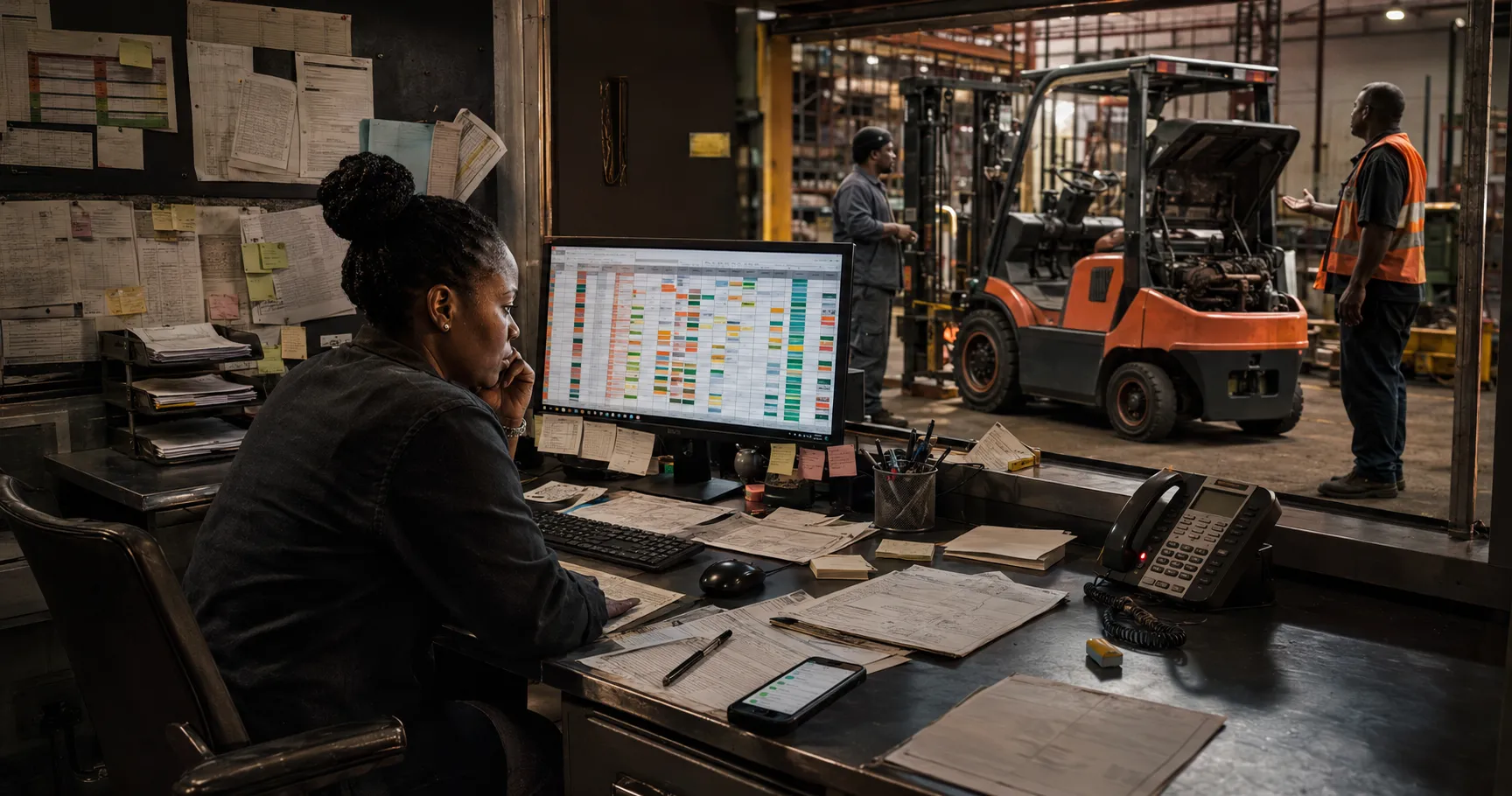
For many businesses, forklift fleet management hasn’t evolved nearly as much as the operations those fleets support. Warehouses have become smarter. Distribution centres have become faster. Supply chains have become increasingly data-driven. Yet behind the scenes, many forklift fleets are still managed through a familiar combination of spreadsheets, WhatsApp messages, emails and supplier updates.
It works. Until it doesn’t.
The challenge isn’t that these tools are bad. Excel remains one of the world’s most powerful business applications, and WhatsApp has become an essential communication tool for operational teams. The problem begins when these tools become the fleet management system itself.
The Reality in Most Operations
Walk into almost any warehouse or manufacturing facility and you’ll find information spread across multiple places. Service schedules sit in spreadsheets. Breakdown updates arrive via WhatsApp. Invoices are stored in finance systems. Compliance certificates live in email folders. Supplier reports arrive monthly. Managers keep their own notes. Everyone has part of the picture. Nobody has the whole picture.
Fragmented Information Creates Hidden Risk
The biggest challenge isn’t missing information. It’s disconnected information.
A service manager might know a machine has suffered three repeat breakdowns. Finance might know maintenance costs have doubled. Operations knows the equipment is constantly unavailable. The supplier has technician records. But because none of that information is connected, nobody recognises the complete story. Instead of identifying patterns, businesses simply solve today’s problem and move on to tomorrow’s.
Reactive Management Becomes the Norm
Most organisations don’t intentionally manage their fleets reactively.
- It simply happens over time.
- A machine breaks down.
- Someone sends a WhatsApp.
- A technician is dispatched.
- The repair is completed.
- The spreadsheet gets updated.
The cycle repeats. While each individual repair may be handled efficiently, the business never steps back to ask bigger questions. Which machines consume the most maintenance spend? Which suppliers consistently miss response times? Which sites experience the highest downtime? Which assets should actually be replaced instead of repaired? Without connected information, those answers remain hidden.
Visibility Changes Everything
The moment fleet information is brought together in one place, management changes completely. Instead of chasing updates, operations teams gain real-time visibility. Instead of relying on memory, they rely on measurable data. Instead of reacting to failures, they begin identifying trends before they become operational problems. Visibility doesn’t simply improve reporting. It fundamentally changes decision-making.
The Difference Between Managing Repairs and Managing Performance
Repairing forklifts is the responsibility of service providers. Managing fleet performance is the responsibility of the business. Those are two very different objectives. Service providers focus on completing work. Business leaders need to understand uptime, operational cost, supplier performance, compliance, utilisation and long-term fleet health. Those decisions require independent information, not fragmented updates.
Why FMC Exists
FMC wasn’t built to replace Excel. It wasn’t built to replace WhatsApp. And it certainly wasn’t built to replace your maintenance provider. It was built to replace fragmentation. The FMC Fleet Manager platform brings together fleet activity, service events, compliance records, downtime, supplier performance and operational reporting into a single source of truth. Instead of multiple spreadsheets, email chains and supplier portals, management gains one clear view of every asset across every site. The result isn’t simply better reporting. It’s better control.
The Future of Fleet Management
As logistics, manufacturing and warehousing become increasingly connected, forklift fleet management must evolve alongside them. Businesses can no longer afford to make operational decisions based on scattered information and assumptions. The organisations that gain a competitive advantage won’t necessarily own the newest forklifts. They’ll be the ones that have the clearest visibility into the fleets they already have. Excel will always have a place. WhatsApp will always have a place. But neither should be responsible for managing one of your business’s most critical operational assets.