
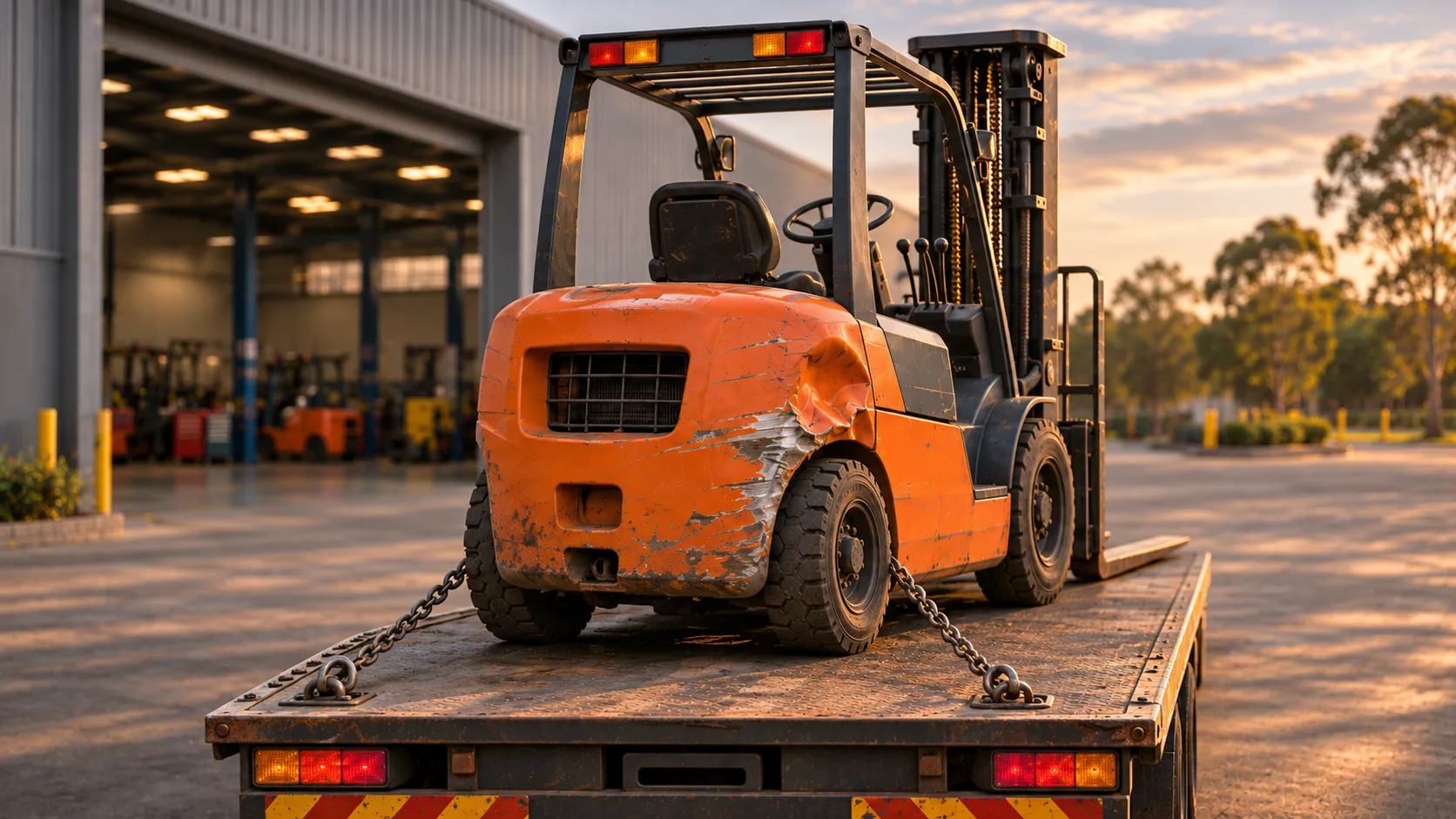
The hire unit comes back on a Thursday afternoon. The workshop foreman walks round it and finds a cracked rear light, a deep gouge in the mast channel and a seat torn along one side. He takes three photos on his phone and books it in for repair.
A week later the customer receives the damage note. Their reply arrives within the hour: “That gouge was there when it was delivered. Our driver mentioned it on day one.” Nobody can find a record of the driver mentioning anything. Nobody can find a delivery record that says it wasn’t there either.
So begins a long email thread in which both sides are fairly sure they are right and neither can prove it.
Most damage disputes are really record disputes
Off-hire arguments rarely start because someone is being dishonest. They start because the condition of the machine at delivery was never properly captured, or was captured somewhere nobody can now find.
The delivery driver signed a delivery note that says “unit delivered in good order”. The customer signed it without looking, because a forklift was needed on the dock twenty minutes ago. The rental desk has a checklist from the last return, but it belongs to the previous hire. The photographs, if there are any, live on a phone that has since been upgraded.
When the record is thin, the conversation fills the gap with memory, and memory is generous to whoever is doing the remembering.
Fair wear and tear is a definition, not a feeling
Every hire agreement expects some wear. Tyres wear, forks pick up scuffs and seats lose their shape. The trouble is that “fair wear and tear” means different things to the person who drove the machine and the person who has to repair it.
The way to settle that is before the hire begins, not after it ends. Agree what counts as normal wear for the type of work, what counts as damage and what happens when damage is found. Write it into the terms the customer actually sees, and make sure the rental and workshop teams read it the same way.
When everyone works from the same definition, most returns become a calm comparison rather than a negotiation.
The delivery inspection is the one that matters most
It is tempting to treat the return inspection as the important one, because that is where damage is found. In practice the delivery inspection carries more weight, because it is the baseline everything else is measured against.
A useful delivery record covers the hour meter reading, the condition of the forks, mast, tyres, lights, seat, bodywork and any attachments, plus anything already worn or marked. Photographs should be taken from consistent angles, so the return photographs can be compared like for like. The customer’s representative should see the machine, see the record and sign it.
That last step can feel awkward on a busy site. It is far less awkward than a disputed invoice six weeks later.
Return inspections should mirror the delivery
A return inspection only works if it checks the same things in the same way. If the delivery check covered twelve points and the return check covers twenty, the extra eight will produce findings with nothing to compare them against.
Use the same checklist, the same photo angles and, where possible, record the return with the customer present or with enough evidence that they can see what was found. Note the hour meter reading too. A machine that came back with far more hours than expected tells its own story about how it was used.
Where damage is found, record it specifically: what, where, how severe and whether it appears on the delivery record. “Damage to mast” invites an argument. “Gouge on left mast channel, approximately 15 cm, not present in delivery photo 4” mostly ends one.
Keep the record with the machine, not the hire
Hire units move from customer to customer, and their history matters. A dent noted at the end of one hire should appear on the next delivery record, so the following customer is not asked to answer for it.
That only happens if the inspection records stay attached to the asset itself, rather than filed under a contract number or a customer folder that closes when the hire ends. When the record follows the machine, each new hire starts from an honest baseline and repeat damage on a particular unit becomes easier to spot.
It also helps the workshop. A unit that keeps coming back with the same damage may be going out to the wrong application, which is worth a conversation with the customer before the next hire rather than after it.
Where FMC supports fairer off-hire conversations
FMC is built to keep that kind of evidence in one place rather than spread across phones, paper and inboxes.
The FMC Technician Mobile App is an Android-compatible field tool for inspections, readings, photographs, notes and digital customer sign-off, captured while the machine is still in front of the technician. FMC Asset Management keeps photographs, documents and lifecycle history on each machine’s own record, so the condition notes travel with the unit from one hire to the next.
FMC Contract Management records the equipment covered, the sites, the important dates and the agreed terms, inclusions and exclusions for each agreement. When a return question comes up, the team can check what was agreed without starting another search through old emails. The records support the conversation; people still need to have it fairly.
A simple off-hire routine worth adopting
Before your next hire unit leaves the yard, check that your process can answer yes to each of these:
- Does the customer see and sign a delivery inspection, with photographs from fixed angles?
- Are fair wear and tear and damage defined in terms the customer has read?
- Does the return inspection use the same checklist and photo angles as the delivery?
- Is any damage recorded specifically, with a reference to the delivery record?
- Do inspection records stay with the machine for its next hire?
None of this needs to slow a delivery down. Once it becomes the routine, it takes a few minutes per unit and saves far longer at the other end.
It also changes the tone of the relationship. A customer who has seen the evidence at both ends is much less likely to feel ambushed by a damage note, and much more likely to hire from you again.
A damage dispute settled by evidence takes minutes. One settled by memory can take the whole account.