
The Most Expensive Forklift in Your Fleet Isn’t the One You Think
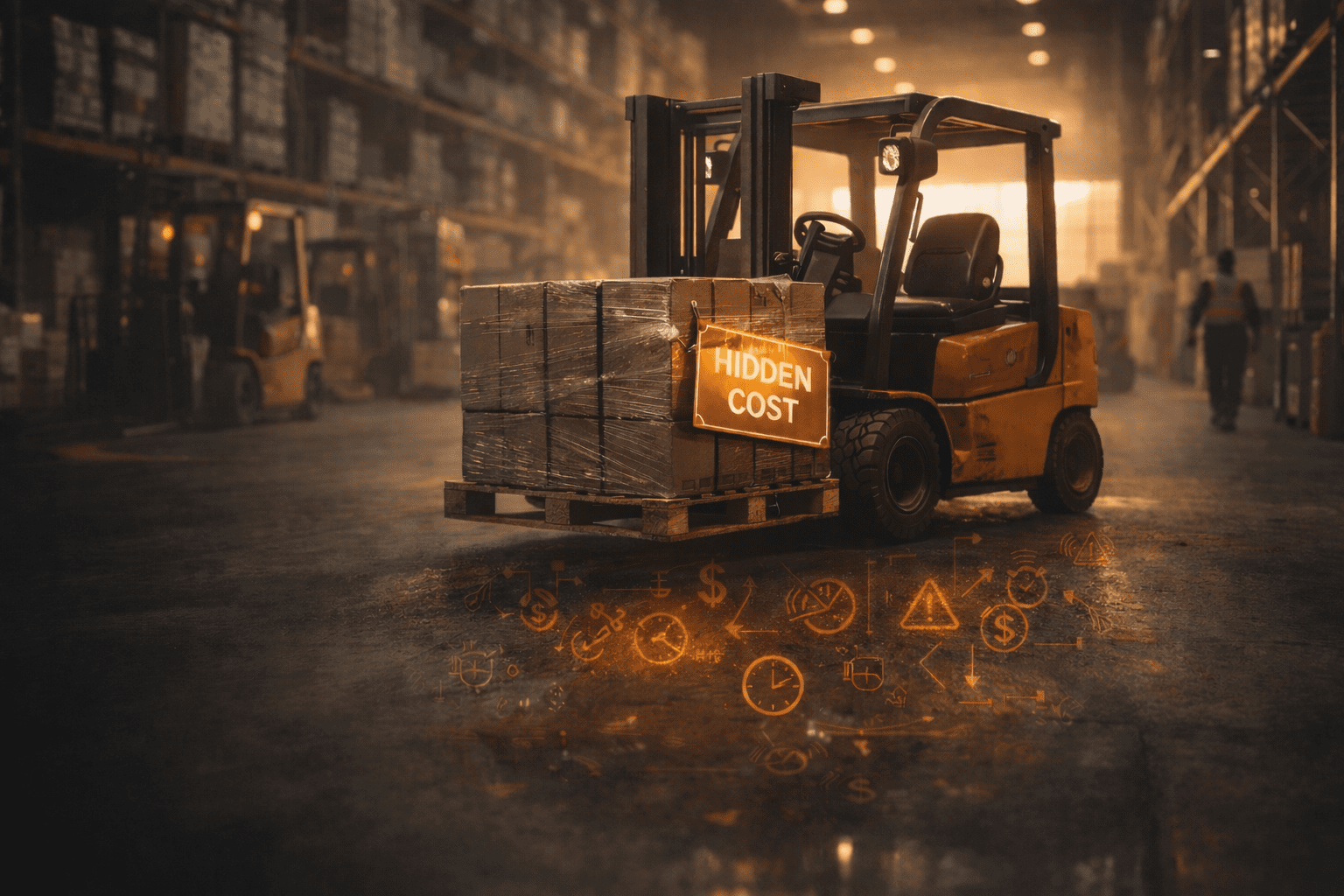
Introduction: You’re Probably Looking at the Wrong Machine Ask any operations manager, finance director, or procurement lead a simple question: “Which forklift in your fleet costs you the most?” The answers are predictable. It’s usually: The large diesel unit The high-hour machine The one with the biggest monthly rental Or the one that just had a major breakdown But here’s the uncomfortable truth:
The most expensive forklift in your fleet is rarely the one you think it is.
In fact, it’s often:
- A mid-range unit
- A “reliable” machine
- A forklift that doesn’t stand out on paper
Because the real cost of a forklift isn’t just what you see on an invoice.
It’s what you don’t see at all.

The Illusion of Cost: What Most Businesses Measure
Most companies believe they understand their fleet costs.
They track:
Monthly rental or lease costs
Service invoices
Parts spend
Fuel or energy usage
And while these are important, they only tell part of the story.
This is what we call “visible cost.”
It’s neat.
It’s reportable.
It fits into a spreadsheet.
But it’s also dangerously incomplete.
Because the real cost of a forklift lies in:
- Downtime
- Inefficiency
- Rework
- Poor technician allocation
- Missed service intervals
- SLA failures
- Operational disruption
And most importantly…
A lack of visibility.
The Hidden Cost Layer: Where the Real Money Goes
Let’s break this down.
1. Unplanned Downtime
A forklift breaks down unexpectedly.
On paper:
- A repair is logged
- A technician is dispatched
- An invoice is issued
But operationally:
- Loads are delayed
- Production slows down
- Alternative equipment is used inefficiently
- Labour stands idle or is redeployed
None of this appears on your forklift cost report.
Yet it has a direct impact on your business.
2. Repeat Failures (The Silent Profit Killer)
One of the biggest hidden costs in any fleet is repeat breakdowns.
The same unit:
- Fails multiple times
- Receives reactive repairs
- Never gets root cause analysis
Without visibility, this becomes normal.
But in reality:
- You’re paying for the same problem repeatedly
- Technician time is wasted
- Parts are replaced unnecessarily
- Downtime compounds
The cost is exponential, not linear.
3. Reactive vs Planned Maintenance
When service schedules aren’t properly tracked or enforced:
- Preventative maintenance slips
- Machines move into reactive cycles
- Technicians operate in “firefighting mode”
This leads to:
- Higher repair costs
- Increased breakdown frequency
- Reduced asset lifespan
And yet…
Most businesses don’t quantify this shift.
4. Technician Inefficiency
Without proper oversight, technician management becomes guesswork.
Questions that often can’t be answered:
- How long did the job actually take?
- Was the correct scope followed?
- Was additional work authorised?
- How much time was spent on rework?
This results in:
- Inflated labour costs
- Uncontrolled overtime
- Inconsistent service quality
Again…
These costs rarely appear in a structured report.
5. SLA Failures and Compliance Risk
Most fleets operate under service level agreements (SLAs).
But without real-time tracking:
- Response times are unclear
- Completion times are inconsistent
- Compliance records are incomplete
This exposes businesses to:
- Contractual disputes
- Audit failures
- Financial penalties
And reputational risk.
The “Cheap” Forklift That Becomes the Most Expensive
Let’s bring this to life.
Consider a standard electric forklift in your fleet.
On paper:
- Moderate monthly cost
- Average usage
- No major red flags
But in reality:
- It breaks down frequently
- Service intervals are inconsistent
- Technicians revisit the same issues
- Jobs are extended or duplicated
- Downtime disrupts operations
Over time:
- Labour costs increase
- Parts costs increase
- Downtime cost multiplies
- Productivity drops
And suddenly…
This “average” forklift becomes the most expensive asset in your fleet.
Not because of what it costs.
But because of what it causes.

Why Most Businesses Get “Cost Per Machine” Completely Wrong
The concept of “cost per machine” is widely used.
But in most cases, it’s fundamentally flawed.
Why?
Because it’s based on incomplete data.
Typical calculations include:
- Rental or lease cost
- Service spend
- Fuel or energy
But exclude:
- Downtime impact
- Lost productivity
- Repeat failures
- Technician inefficiencies
- SLA performance
Which means:
You’re not measuring cost. You’re estimating it.
And decisions based on estimates are rarely optimal.
The Visibility Gap: The Real Problem
At the core of all of this is a single issue:
Lack of visibility.
Most forklift fleets are managed through:
- Spreadsheets
- Emails
- Paper job cards
- Supplier reports
- Disconnected systems
This creates:
- Fragmented information
- Delayed reporting
- No single source of truth
And most importantly:
No real-time understanding of what’s actually happening in your fleet.
What True Visibility Looks Like
To truly understand cost, you need more than data.
You need connected, structured, real-time insight.
This includes:
1. Real Cost Per Unit
Total spend linked to each machine
Including labour, parts, downtime trends
2. Breakdown Frequency Tracking
Which machines fail most often
Patterns over time
Root cause visibility
3. Technician Performance Insights
Time on site
Job duration vs scope
Repeat visits
Rework tracking
4. Service Compliance Monitoring
Scheduled vs completed services
Missed intervals
Compliance status per machine
5. SLA Performance Tracking
Response times
Resolution times
Supplier performance benchmarking
6. Operational Impact Visibility
Downtime trends
High-risk assets
Cost escalation indicators
From Data to Decision-Making
When visibility improves, decision-making changes.
Instead of reacting, you can:
- Identify underperforming assets early
- Replace or redeploy machines strategically
- Hold service providers accountable
- Reduce repeat failures
- Optimise technician allocation
- Control overtime and labour costs
In short:
You move from managing events to managing performance.
Where FMC Fits In
This is exactly where FMC operates.
Not as a supplier.
Not as a service provider.
But as the independent layer of visibility and control across your fleet.
FMC connects:
- Machines
- Technicians
- Service events
- Compliance requirements
- Cost data
Into a single, structured platform.
The result:
- Real-time fleet visibility
- Transparent cost tracking
- Measurable technician performance
- SLA accountability
- Data-driven decision-making
The Shift: From Assumption to Insight
Without visibility:
- You assume performance
- You estimate cost
- You react to problems
With visibility:
- You measure performance
- You understand cost
- You prevent problems
And that’s the shift that changes everything.
Conclusion: It Was Never About the Forklift
So, back to the original question:
Which forklift in your fleet costs you the most?
It’s not the biggest.
It’s not the newest.
It’s not even the one with the highest invoice.
It’s the one you don’t truly understand.
Because cost isn’t just what you pay.
It’s what you fail to see, track, and control.
And until that changes…
You’re not managing your fleet.
You’re managing assumptions.
Final Thought
The problem isn’t your forklifts.
It’s the visibility around them.
And once you fix that…
Everything else becomes measurable, manageable, and optimisable.