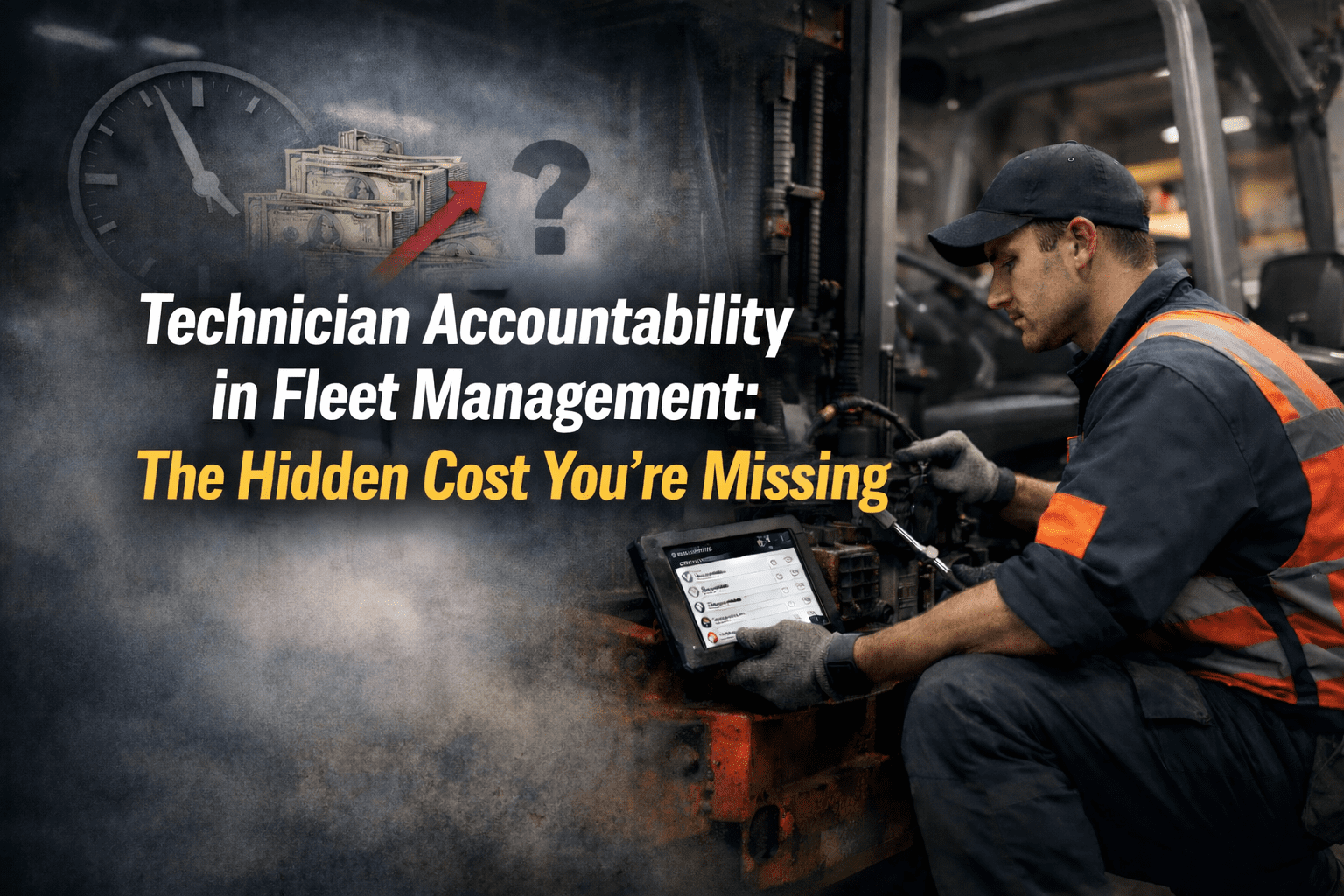

Excel, WhatsApp & Hope: The Unofficial Fleet Management System
Let's unpack why fragmented fleet management has become the industry norm and why FMC is finally delivering the visibility, accountability, and control businesses have been waiting for.
For years, the forklift industry has been held together by three things:
- Excel spreadsheets
- WhatsApp messages
- And hope
Hope that:
- The service was actually booked
- The technician is on the way
- The load test certificate exists somewhere
- Someone updated the spreadsheet
- The breakdown wasn’t logged twice
- The invoice matches what was approved on site
Sound familiar?
You’re not alone.
Across logistics, warehousing, manufacturing, and distribution, businesses have quietly built operational workarounds around fragmented systems.
And somehow… operations kept moving.
Until complexity caught up.
The “System” Everyone Knows
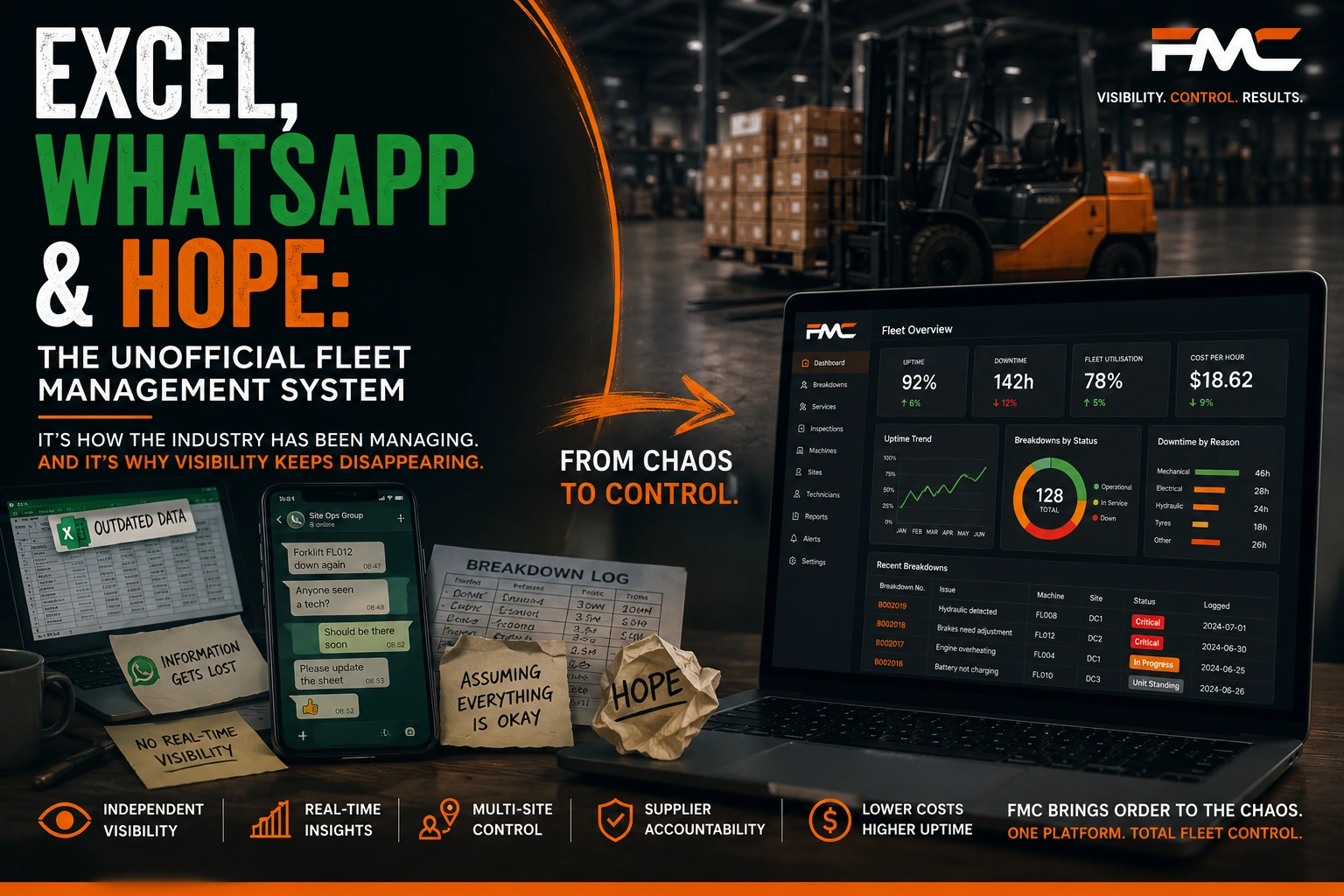
Most forklift fleet environments look something like this:
📱 Breakdown logged via WhatsApp
📊 Service schedule tracked in Excel
📧 Compliance certificate emailed separately
📞 Technician ETA communicated verbally
📝 Job card signed on paper
🤞 Spreadsheet updated “later”
Individually, none of these seem like major issues.
Collectively?
They create:
- Visibility gaps
- Delayed decisions
- Hidden downtime
- Compliance risk
- Supplier disputes
- Uncontrolled costs
And nobody sees the full picture.
The Dangerous Part? It Feels Normal.
That’s the real problem.
The industry adapted so well to fragmented management that dysfunction became standard operating procedure.
People became excellent at:
- Chasing updates
- Forwarding screenshots
- Calling suppliers
- Building manual trackers
- Creating “master spreadsheets”
Entire operations now rely on:
“Did anyone check with John?”
The Spreadsheet Problem
Excel is brilliant.
For calculations.
Not fleet governance.
Spreadsheets:
- Don’t track live downtime
- Don’t enforce SLAs
- Don’t measure technician performance
- Don’t prevent missed services
- Don’t centralise supplier accountability
Most importantly:
They only show what somebody remembered to capture.

WhatsApp Is Not an Operational Platform
WhatsApp is fast.
But it was never designed to manage:
- Fleet uptime
- Multi-site breakdowns
- Compliance tracking
- Service history
- Cost visibility
Operationally critical information disappears into:
- Voice notes
- Group chats
- Photos
- Forwarded messages
Then six weeks later:
“Can someone resend that?”
And Hope… Well, Hope Isn’t a Strategy
Hope is:
- Assuming the supplier is managing it
- Assuming the site updated the tracker
- Assuming the service happened on time
- Assuming the downtime isn’t that bad
Hope feels operational.
Until:
- Audits fail
- Costs spike
- Repeat breakdowns increase
- Customers complain
- Uptime drops
That’s usually when businesses realise:
They never truly had visibility in the first place.
What the Industry Was Actually Waiting For
The logistics and materials handling industry didn’t need:
- More spreadsheets
- More WhatsApp groups
- More manual reporting
It needed:
- Visibility
- Accountability
- Central control
- Independent oversight
That’s exactly where FMC fits.
FMC: From Chaos to Control
FMC centralises:
- Breakdowns
- Services
- Compliance
- Technicians
- Suppliers
- Fleet performance
Into one live operational environment.
Instead of:
📱 “Did anyone log this?”
You get:
📊 Real-time visibility.
Instead of:
📧 “Can you resend the certificate?”
You get:
✅ Central compliance tracking.
Instead of:
🤞 “I think uptime is okay…”
You get:
📈 Measured performance.
The Shift Is Bigger Than Technology
This isn’t just about software.
It’s about moving the industry from:
- Reactive to proactive
- Assumed performance to measurable performance
- Supplier updates to independent visibility
That shift changes everything.
Final Thought
For years, the forklift industry survived on:
- Excel
- Hope
Now it finally has something better.
FMC.