


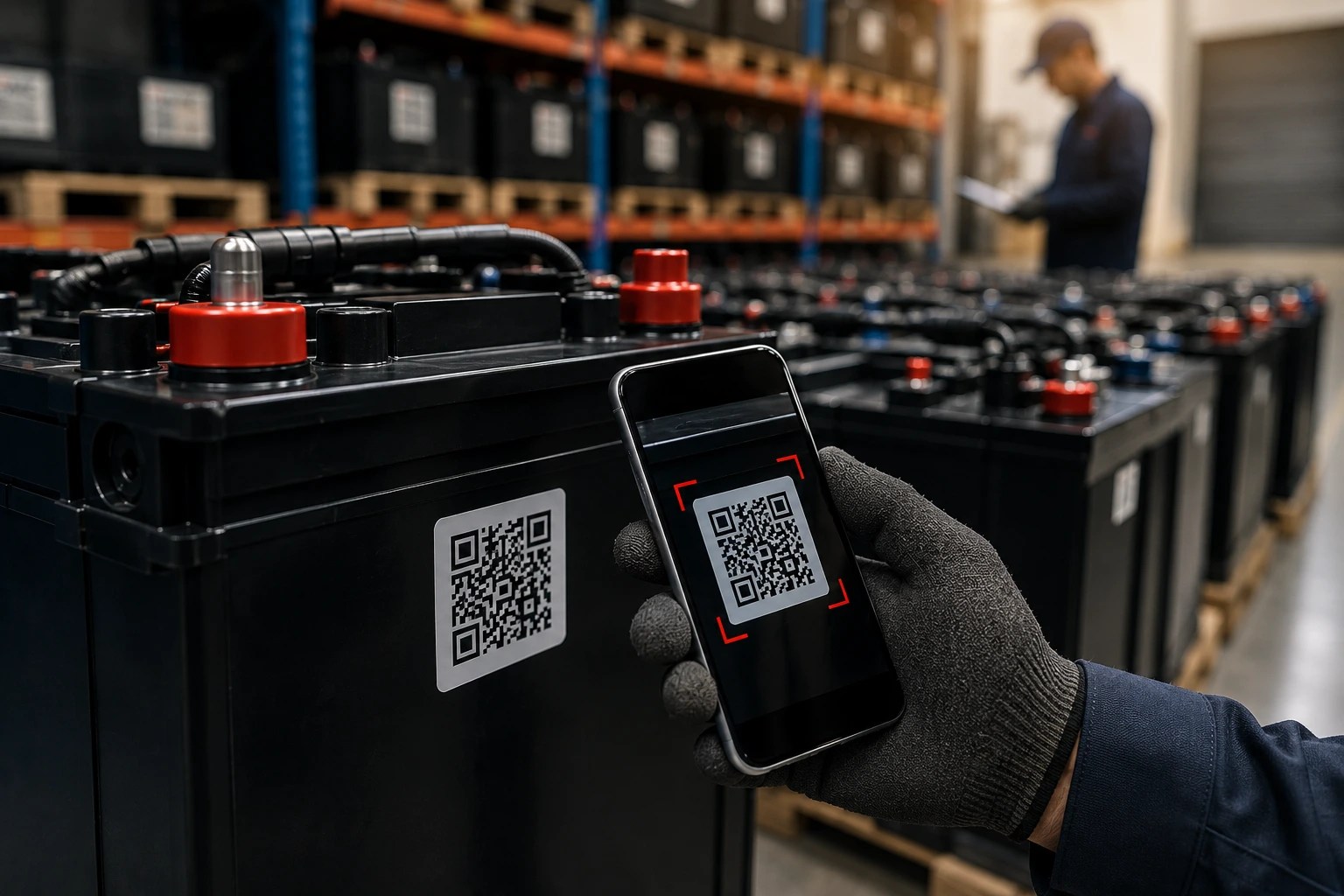
A simple QR code can transform the way battery companies manage assets, technicians, warranties and compliance. Discover how digital battery tracking is replacing spreadsheets and giving businesses complete operational visibility.
For something so small, a QR code can solve some surprisingly big problems.
At first glance, it’s just a sticker.
A square of black and white pixels attached to a battery.
Easy to overlook.
But for battery companies managing hundreds or thousands of assets across multiple customers, sites, technicians, and service contracts, that small sticker could be the difference between operational control and operational chaos.
Because the reality is this:
Most battery companies don’t struggle with batteries.
They struggle with visibility.
And visibility starts with identification.
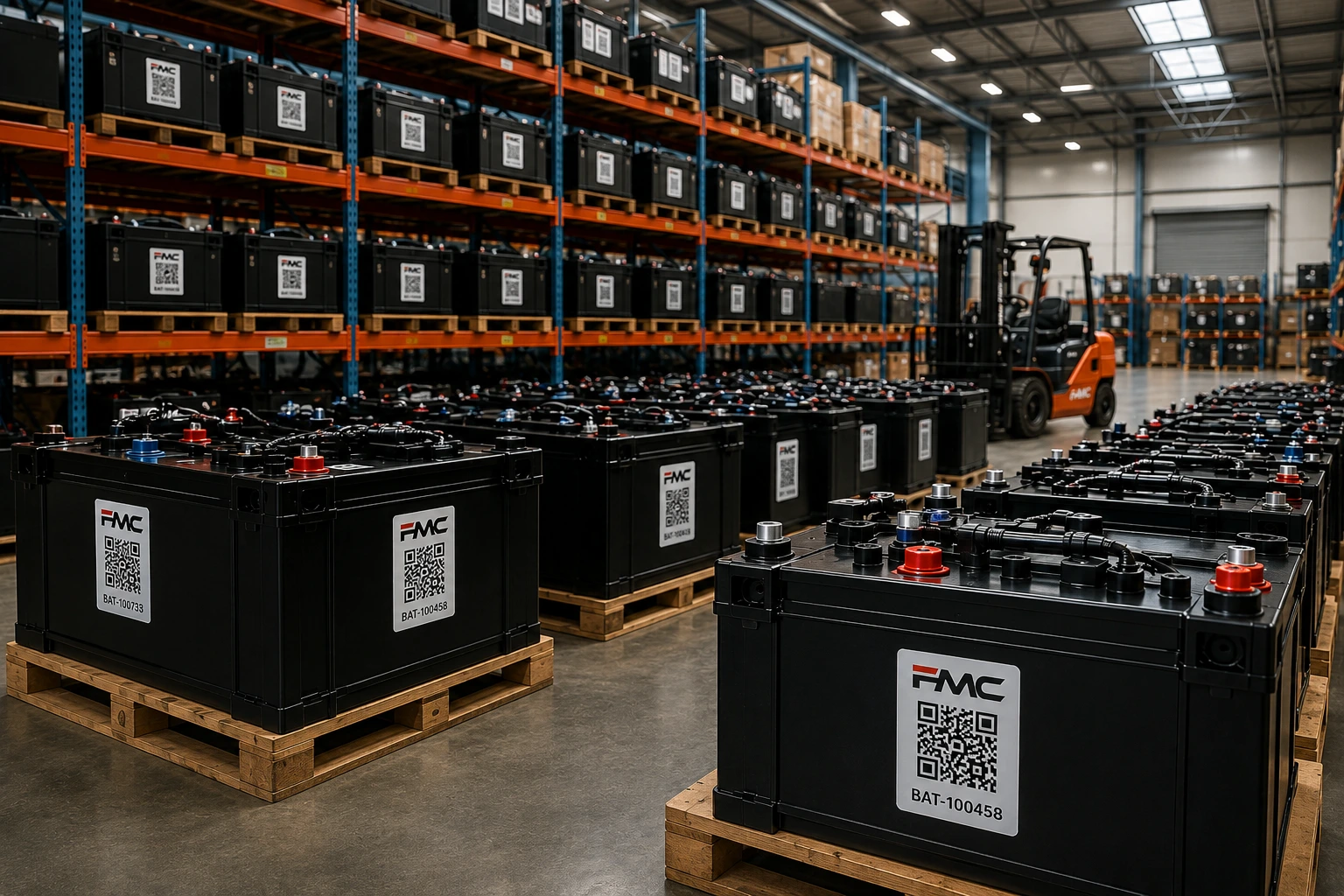
The Question Every Battery Company Hears
It usually starts with a simple phone call.
A customer asks:
“Can you tell me when this battery was last serviced?”
Or:
“Is this battery still under warranty?”
Or:
“One of our batteries isn’t performing properly. Can you check its history?”
Simple questions.
Yet answering them often involves:
- Searching spreadsheets
- Looking through emails
- Calling technicians
- Checking paper job cards
- Comparing serial numbers
By the time the answer is found, valuable time has already been lost.
The problem isn’t the battery.
The problem is that the information isn’t instantly available.
The Hidden Cost of Poor Identification
Many battery companies still rely on:
- Serial numbers
- Asset tags
- Manual registers
- Paper records
These systems worked when operations were smaller.
But modern battery businesses are managing:
- Lead-acid batteries
- Lithium-ion batteries
- National service contracts
- Multiple customer sites
- Large technician teams
As operations grow, identifying and tracking every asset becomes increasingly difficult.
And when visibility disappears, costs start increasing.
Batteries are:
- Misidentified
- Moved between sites
- Serviced incorrectly
- Overlooked for inspections
- Difficult to trace during warranty claims
None of these issues happen because people aren’t trying.
They happen because the system isn’t designed for scale.
The Power of a Single Scan
Imagine a technician arriving on site.
Instead of:
- Searching paperwork
- Calling the office
- Looking for serial numbers
They simply scan a QR code.
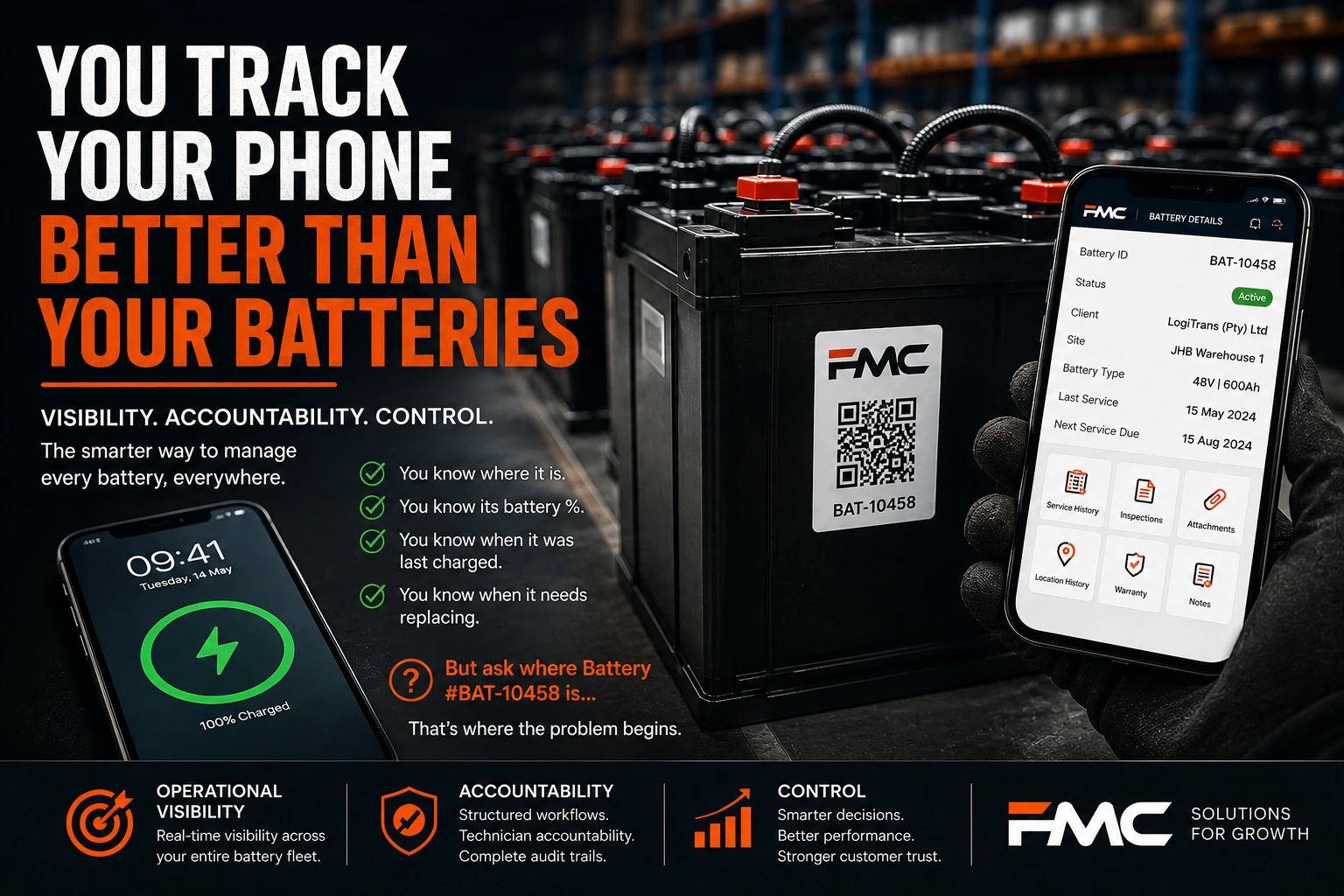
Instantly they can see:
- Battery ID
- Customer details
- Site information
- Installation date
- Service history
- Inspection history
- Warranty status
- Previous recommendations
- Photos
- Notes
Everything.
Immediately.
The battery effectively carries its own history.
Why QR Codes Matter for Battery Companies
QR codes aren’t just about convenience.
They create accountability.
Every interaction with a battery becomes traceable.
Every service visit becomes recorded.
Every inspection becomes visible.
Every technician action becomes linked to the asset.
This creates a complete digital audit trail.
And audit trails matter.
Especially when:
- Customers raise disputes
- Warranty claims arise
- Compliance audits occur
- Service quality is questioned
Without records, companies rely on memory.
With records, companies rely on facts.
Compliance Starts with Visibility
One of the biggest challenges facing battery companies is compliance.
Many businesses are responsible for ensuring:
- Maintenance schedules are followed
- Inspections are completed
- Recommendations are documented
- Service intervals are maintained
But compliance is difficult when information is scattered.
Spreadsheets don’t automatically update.
Paper records get misplaced.
Emails get buried.
QR-driven systems solve this by centralising information around the asset itself.
Every scan creates visibility.
And visibility creates compliance.
Technician Accountability Without Micromanagement
Battery companies don’t need more paperwork.
They need better accountability.
QR codes allow technicians to:
- Record work completed
- Capture photos
- Log findings
- Update service records
- Generate audit trails
All from the asset itself.
This improves:
- Service quality
- Accuracy
- Communication
- Customer confidence
While reducing administrative burden.
The Warranty Advantage
Warranty management is one of the biggest operational headaches in the battery industry.
A failed battery often triggers a lengthy investigation.
Questions include:
- Was it serviced correctly?
- Was maintenance completed?
- Were recommendations followed?
- Is the warranty still valid?
With QR-based tracking, these answers become available instantly.
Instead of searching for records, companies can simply scan the battery.
The information is already there.
The FMC Approach
FMC’s Battery Division Management Platform uses QR technology to give every battery a digital identity.
A single scan provides access to:
- Asset information
- Customer records
- Site details
- Service history
- Inspection reports
- Warranty tracking
- Technician records
- Lifecycle management
Whether the battery is in Johannesburg, Cape Town, Durban, or a remote customer site, the information remains accessible.
The result is greater:
- Visibility
- Accountability
- Compliance
- Control
Across the entire operation.
Why This Matters More Than Ever
Battery companies are evolving.
Customers expect faster answers.
Operations are becoming more complex.
Service networks are expanding.
Manual systems are reaching their limits.
The businesses that thrive over the next decade will not necessarily be those with the most batteries.
They will be the companies with the greatest visibility over those batteries.
Because visibility drives:
- Better service
- Better decisions
- Better compliance
- Better customer experiences
Final Thought
The future of battery management isn’t hidden inside a spreadsheet.
It isn’t sitting in somebody’s inbox.
And it certainly isn’t buried in a filing cabinet.
Sometimes the solution is much simpler.
A small QR code.
A single scan.
And complete visibility.
Because the smallest sticker in your operation might be solving the biggest problems in your business.